

Micro brushless DC motors have become an essential component in today's compact electronic devices. From wearable technology and medical equipment to drones, robotics, and smart home products, these miniature motors deliver high efficiency, precise speed control, and an exceptionally long service life.
Compared with traditional brushed motors, a micro brushless DC motor (BLDC motor) eliminates mechanical brushes and commutators. Instead, it relies on electronic commutation, reducing friction and wear while significantly improving reliability. As products continue to shrink in size while demanding greater performance, miniature brushless motors are increasingly becoming the preferred solution for OEM manufacturers and product designers.
Whether you are developing a smartwatch, handheld medical device, precision instrument, or industrial automation system, selecting the right micro brushless motor can directly influence your product's efficiency, battery life, operating noise, and long-term durability.
In this comprehensive guide, we'll explain everything you need to know about micro brushless DC motors, including:
- What a micro brushless motor is
- How a BLDC motor works
- Key advantages over brushed motors
- Typical industry applications
- How to select the right motor for your project
- Customization options for OEM applications
By the end of this guide, you'll have a clear understanding of how to choose the best miniature brushless motor for your next product.
What Is a Micro Brushless DC Motor?
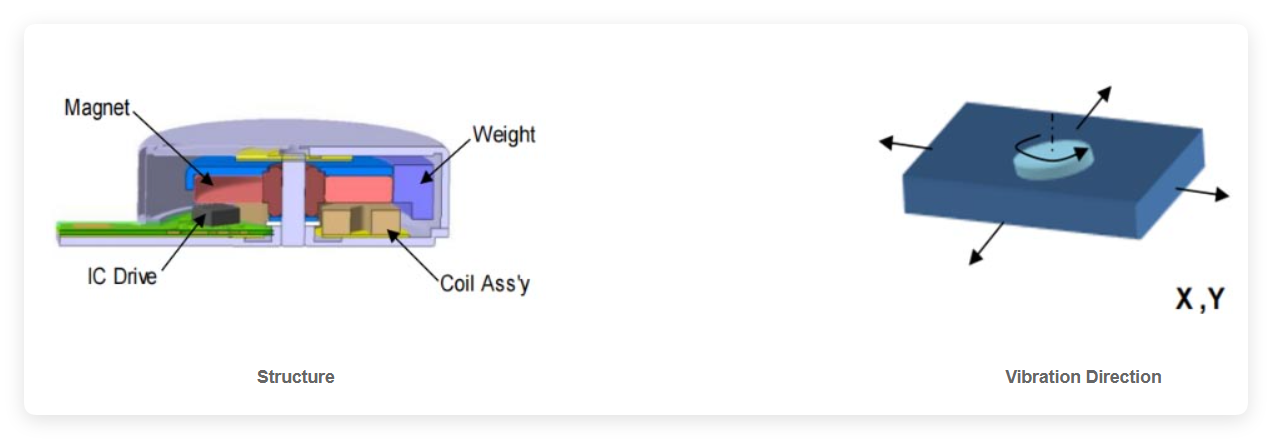
A micro brushless DC motor, often referred to as a miniature BLDC motor, is a compact electric motor that uses electronic commutation instead of physical brushes to generate rotational motion.
Unlike conventional brushed motors, brushless motors replace mechanical contacts with electronic controllers that continuously energize the motor windings in the correct sequence. This design minimizes mechanical wear, reduces electrical noise, and greatly extends the motor's operational lifespan.
Micro BLDC motors are typically manufactured with diameters ranging from 5 mm to 12mm, making them ideal for products where installation space is extremely limited but performance requirements remain high.
Their compact size, combined with excellent efficiency and reliability, allows engineers to integrate them into increasingly sophisticated devices without compromising performance.
How Small Can a Brushless Motor Be?
One of the biggest advantages of BLDC technology is its scalability.
Today's smallest brushless motors can be manufactured with diameters as small as 5 mm, allowing them to fit inside highly compact products such as:
- Hearing aids
- Smart rings
- Medical catheters
- Portable diagnostic equipment
- Miniature pumps
- Endoscopic instruments
As manufacturing technology continues to improve, micro brushless motors are becoming even smaller while delivering higher torque density and greater energy efficiency.
If you're interested in ultra-miniature designs, you can also explore our detailed guide on the smallest brushless motor to learn more about size limitations, performance characteristics, and application examples.
What Is the Difference Between a Brushless Motor and a Standard DC Motor?
A common question among engineers and product designers is whether a brushless motor is simply a smaller version of a traditional DC motor. The answer is no.
Although both operate using direct current, their internal structures and working principles differ significantly.
|
Feature |
Brushed DC Motor |
Micro Brushless DC Motor |
| Commutation | Mechanical Brushes | Electronic Controller |
| Brush Wear | Yes | No |
| Maintenance | Regular | Minimal |
| Operating Noise | Higher | Lower |
| Efficiency | Moderate | High |
| Service Life | Limited | Very Long |
| Precision Speed Control | Average | Excellent |
Because of these differences, micro brushless motors are increasingly selected for high-performance applications where reliability and efficiency are critical.
Which Motor Is Right for Your Project?
There is no universal "best" motor—only the best fit for your specific application.
A brushed motor may still be suitable if:
- Cost is the primary concern.
- The motor operates only occasionally.
- Product lifespan requirements are relatively short.
- Simple control is sufficient.
A micro brushless DC motor is generally the better choice if your product requires:
- Long operational life
- High reliability
- Low noise
- High efficiency
- Stable speed control
- Minimal maintenance
For many modern electronic products, the higher initial investment in a brushless motor is often offset by lower maintenance costs, improved performance, and greater long-term reliability.
How Does a Micro Brushless DC Motor Work?
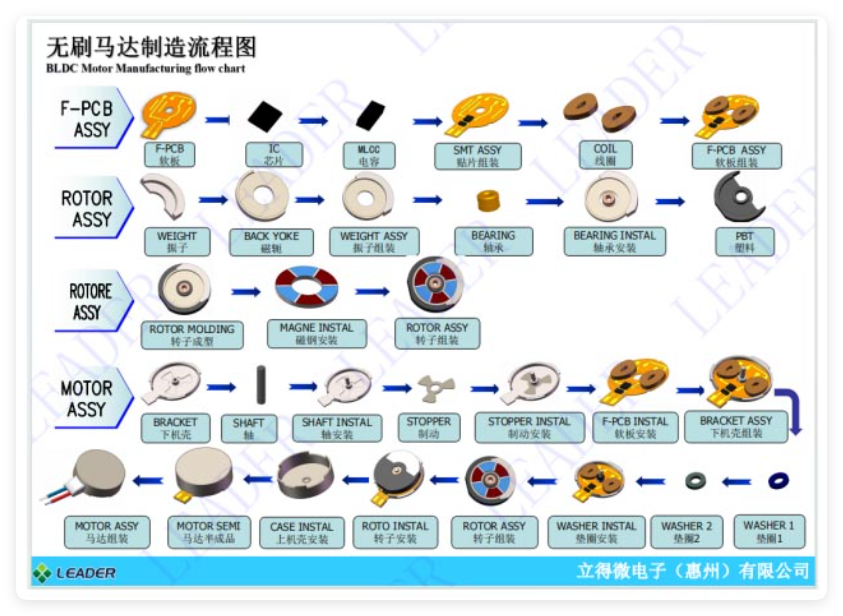
Unlike brushed motors, which rely on physical brushes to switch electrical current, a micro brushless motor uses an electronic controller to perform commutation automatically.
The controller continuously monitors the rotor's position and energizes the appropriate stator windings, creating a rotating magnetic field that drives the permanent magnet rotor.
This process occurs thousands of times per second, allowing the motor to maintain smooth, efficient, and highly accurate rotation.
The simplified operating sequence is shown below:
Why More OEM Manufacturers Are Choosing Micro BLDC Motors
Compared with brushed DC motors, miniature brushless motors provide a number of engineering advantages that directly improve product quality and reduce long-term operating costs.
1. Longer Service Life
One of the biggest advantages of a brushless motor is the absence of carbon brushes.
Since there is no physical contact between brushes and a commutator, there is significantly less mechanical wear during operation. This allows a micro BLDC motor to operate for tens of thousands of hours, depending on the application and operating conditions.
For products that are expected to run continuously or require a long maintenance-free lifespan, brushless technology is often the preferred choice.
2. Higher Energy Efficiency
Brushless motors convert electrical energy into mechanical motion more efficiently because there is less friction and lower electrical loss.
Higher efficiency provides several important benefits:
- Lower power consumption
- Reduced heat generation
- Longer battery life
- Improved overall system efficiency
This is particularly valuable for portable electronics and battery-powered devices, where maximizing runtime is a key design objective.
3. Low Noise and Smooth Operation
Noise reduction has become an important design consideration, especially in products that are used close to the human body.
Because brushless motors eliminate brush friction, they generally produce:
- Lower acoustic noise
- Less vibration
- Smoother rotation
- Better user experience
This makes them well suited for products that require quiet operation, such as wearable electronics, medical instruments, and precision handheld devices.
Why Choose a Micro Brushless Motor?
|
Advantage |
Benefit for Product Design |
| No Brushes | Longer lifespan and lower maintenance |
| High Efficiency | Reduced power consumption and longer battery life |
| Low Noise | Better user comfort and quieter operation |
| Precise Speed Control | Improved performance and accuracy |
| Compact Size | Easy integration into small devices |
| High Reliability | Consistent long-term performance |
Micro Brushless Motors for Wearable Devices
The rapid growth of wearable technology has accelerated the adoption of miniature brushless motors. Smart devices are becoming thinner, lighter, and more powerful, creating a need for compact motors that offer quiet operation, low power consumption, and dependable performance.
Micro BLDC motors are particularly well suited to these requirements because they combine high efficiency with a compact form factor and long service life.
Why Wearable Devices Prefer Brushless Motors
Wearable products often operate on small rechargeable batteries and are used in close contact with the human body. As a result, every component must be optimized for efficiency, comfort, and reliability.
Compared with traditional brushed motors, micro brushless motors offer several advantages for wearable applications:
- Lower power consumption for extended battery life
- Reduced operating noise
- Less vibration
- Lower heat generation
- Longer maintenance-free operation
- Compact dimensions for space-saving designs
These characteristics help manufacturers create products that are lighter, quieter, and more comfortable to wear.
Typical Design Considerations
When selecting a micro brushless motor for a wearable device, engineers typically evaluate the following factors:
|
Design Factor |
Why It Matters |
| Motor Diameter | Must fit within the available internal space |
| Motor Thickness | Critical for slim product designs |
| Power Consumption | Directly affects battery runtime |
| Noise Level | Improves user comfort |
| Operating Temperature | Prevents discomfort during extended wear |
| Weight | Supports lightweight product construction |
| Speed Stability | Ensures consistent product performance |
Considering these factors early in the design process can reduce development time and improve overall product reliability.
How to Select the Right Micro Brushless DC Motor
Choosing the right micro brushless DC motor involves much more than simply selecting the smallest motor that fits your product. A well-matched motor improves efficiency, extends product lifespan, reduces power consumption, and enhances the overall user experience.
For OEM and ODM projects, engineers should evaluate both the electrical and mechanical requirements of the application before making a final decision. The following selection guide walks through the key factors that should be considered during the design process.
Start with Your Application Requirements
Every application places different demands on a motor. Before comparing specifications, define the operating conditions and performance expectations of your product.
Ask yourself the following questions:
- How much installation space is available?
- Is the product battery-powered or externally powered?
- Does the motor need continuous or intermittent operation?
- Is low noise important?
- Will the motor operate in high-temperature or humid environments?
- Is customization required?
Clarifying these requirements early can significantly reduce development time and improve the final product design.

Selection Checklist
Before confirming a motor, review the following checklist.
|
Item |
Confirmed |
| Motor diameter fits installation space | ✓ |
| Motor thickness meets product design | ✓ |
| Rated voltage matches power supply | ✓ |
| Speed satisfies performance requirements | ✓ |
| Torque is sufficient for the load | ✓ |
| Noise level meets product standards | ✓ |
| Current consumption is acceptable | ✓ |
| Operating temperature is suitable | ✓ |
| Service life meets product expectations | ✓ |
| Controller compatibility verified | ✓ |
Custom Micro Brushless Motor Options
Off-the-shelf motors are suitable for many applications, but OEM projects often require customized solutions to meet unique design constraints.
At Leader, we support a wide range of customization options to help customers optimize both product performance and manufacturing efficiency.
Connection Options
Different products require different connection methods.
Typical options include:
- Lead wires
- FPCB connection
- JST connectors
- Molex connectors
- Pin headers
- Spring contacts
- SMT terminals
Smallest Brushless Motors Available
As electronic devices continue to shrink, manufacturers are demanding increasingly compact motor solutions. Fortunately, advances in precision manufacturing have made it possible to produce ultra-miniature brushless motors without sacrificing performance.
Today's smallest BLDC motors are designed for applications where every millimeter counts, while still delivering smooth operation, high efficiency, and long service life.
Typical ultra-compact applications include:
- Smart rings
- Hearing devices
- Medical catheters
- Portable diagnostic equipment
- Endoscopic tools
- Precision optical instruments
Compared with larger motors, these miniature solutions require tighter manufacturing tolerances and more sophisticated assembly processes.
| Models | Size(mm) | Rated Voltage(V) | Rated Current (mA) | Rated(RPM) | Voltage(V) |
| LBM0620 | φ6*2.0mm | 3.0V DC | 85mA Max | 16000±3000 | DC2.5-3.8V |
| LBM0518 | φ5*1.8mm | 3.0V DC | 85mA Max | 16000±3000 | DC2.5-3.8V |
| LBM0525 | φ5*2.5mm | 3.0V DC | 85mA Max | 16000±3000 | DC2.5-3.8V |
Ready to Find the Right Micro Brushless Motor?
Selecting the right motor is not only about choosing the correct size—it's about balancing performance, efficiency, reliability, and manufacturability.
Whether you're developing a next-generation wearable device, a precision medical instrument, or a compact industrial product, working with an experienced manufacturer can simplify the selection process and reduce development risks.
At Leader, we provide both standard and custom micro brushless DC motor solutions, backed by engineering support from prototype development through mass production. Our team can help you evaluate application requirements, recommend suitable motor configurations, and develop customized solutions that fit your product goals.
Frequently Asked Questions
Answers to the questions OEM buyers ask most frequently when evaluating micro brushless motor solutions.
Q1: What is the smallest practical micro brushless motor available for production use?
The current practical floor is Ø5mm diameter × 2.5mm thickness. Below Ø5mm, vibration output becomes too low for most industrial applications. Leader produces Ø5mm as the smallest in our micro brushless line — chosen because it represents the best balance of usable performance and manufacturable precision at volume.
Q2: What is the typical MOQ and lead time for custom micro brushless motors?
Standard catalog models ship within 1-2 weeks. Custom specifications (non-standard voltage, tuned RPM, special mounting) require 2-4 weeks depending on complexity. Leader offers engineering samples from 5 pieces with pilot-run MOQ starting at 100 units — designed to support product validation before mass production commitment.
Q3: How do I choose between FPCB and lead-wire connection for my device?
If your device has less than 3mm vertical space for motor integration, FPCB is the correct choice — it eliminates the bend radius lead wires require. For assembly processes involving manual soldering or field-replaceable motors, lead wires offer more flexibility. Production data shows FPCB reduces assembly defects by 15-20% in wearable form factors.
Q4. Are brushless motors more expensive than brushed motors?
Generally, the initial cost of a brushless motor is higher because it requires:
- More precise manufacturing
- Electronic control systems
- Advanced components
However, the total cost of ownership can be lower because brushless motors provide:
- Longer lifespan
- Lower maintenance requirements
- Better efficiency
- Reduced replacement frequency
For many professional applications, the long-term benefits outweigh the initial investment.
Need a Custom Micro Brushless DC Motor Solution?
Choosing the right miniature BLDC motor requires balancing size, performance, efficiency, and reliability.
At Leader, we specialize in providing customized micro brushless DC motor solutions for OEM and ODM customers worldwide. From prototype development to mass production, our engineering team helps customers optimize motor design for compact electronic products, wearable devices, medical equipment, and industrial applications.
Whether you need a standard miniature BLDC motor or a fully customized solution, we can help you find the right motor configuration for your project.
Contact Leader today to discuss your micro brushless motor requirements.
Consult Your Leader Experts
We help you avoid the pitfalls to deliver the quality and value your micro brushless motor need, on-time and on budget.
Post time: Jul-23-2026


