

How to Choose a Vibration Motor Manufacturer: A Practical Guide for OEM & ODM Buyers
When developing a smartphone, wearable, medical device, game controller, smart lock, or other compact electronic product, choosing the right vibration motor manufacturer can have a direct impact on product performance, reliability, and production cost.
A low unit price is not necessarily the best deal. For OEM and ODM projects, you should evaluate the manufacturer's motor technology, engineering capability, quality control, customization options, testing process, production capacity, and long-term supply stability.
This guide explains the most important factors to consider before choosing a vibration motor supplier.
Quick Answer: What Should You Look for in a Vibration Motor Manufacturer?
Before contacting suppliers, use this simple checklist:
- Motor technology: ERM, LRA, BLDC, or customized solution
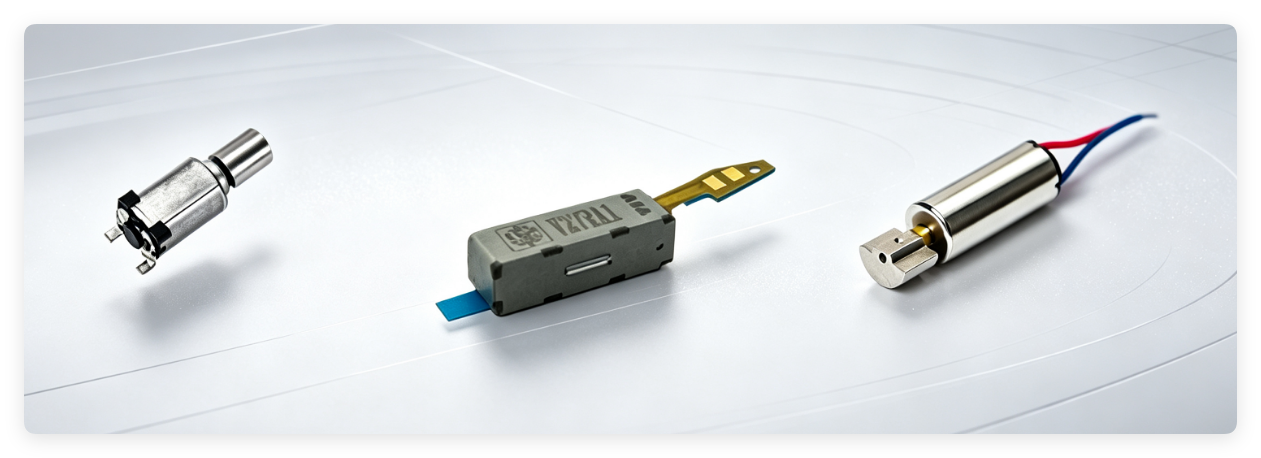
- Product range: Coin, cylindrical, linear, SMD/SMT, ultra-micro motors
- Engineering capability: Standard products + custom development
- Quality control: Incoming material, assembly, performance and reliability testing
- Customization: Size, voltage, frequency, wires, FPCB, connectors, mounting
- Production capacity: Stable mass-production capability
- Technical support: Selection, samples, testing and integration assistance
- Certifications: ISO and applicable product/environmental compliance
- Supply stability: Consistent quality, lead time and production capacity
- Total cost: Not just the initial unit price
Key principle: Choose a manufacturer that can support your product from prototype → validation → mass production, rather than simply finding the cheapest motor supplier.
1. Start With the Right Vibration Motor Technology
Not every vibration motor is suitable for every application. Before comparing manufacturers, determine what type of motor your product actually needs.
|
Motor Type |
Main Advantage |
Typical Applications |
| ERM | Simple, cost-effective vibration | Phones, alarms, basic wearables |
| LRA | Fast and precise haptic feedback | Smartphones, game controllers, wearables |
| BLDC | Long life and stable operation | Medical, industrial, premium electronics |
| SMD/SMT Motor | PCB-level integration | Compact electronics, smart devices |
For example, LRA motors are often preferred when a product requires fast and precise haptic feedback, while ERM motors can be a practical choice for simple vibration alerts. The motor type also affects the driver circuit, power consumption, mechanical design and final user experience.
A good manufacturer should offer more than one solution
If a supplier only sells one type of motor, its recommendation may naturally be limited to its own product range.
A stronger manufacturing partner should be able to compare different technologies and recommend the most appropriate solution according to your:
Size → Voltage → Vibration force → Response time → Power → Lifetime → Cost → Application
2. Evaluate Manufacturing & Engineering Capability
A vibration motor is a small component, but manufacturing it consistently requires precision.
When evaluating a supplier, don't just look at product photos. Ask about:
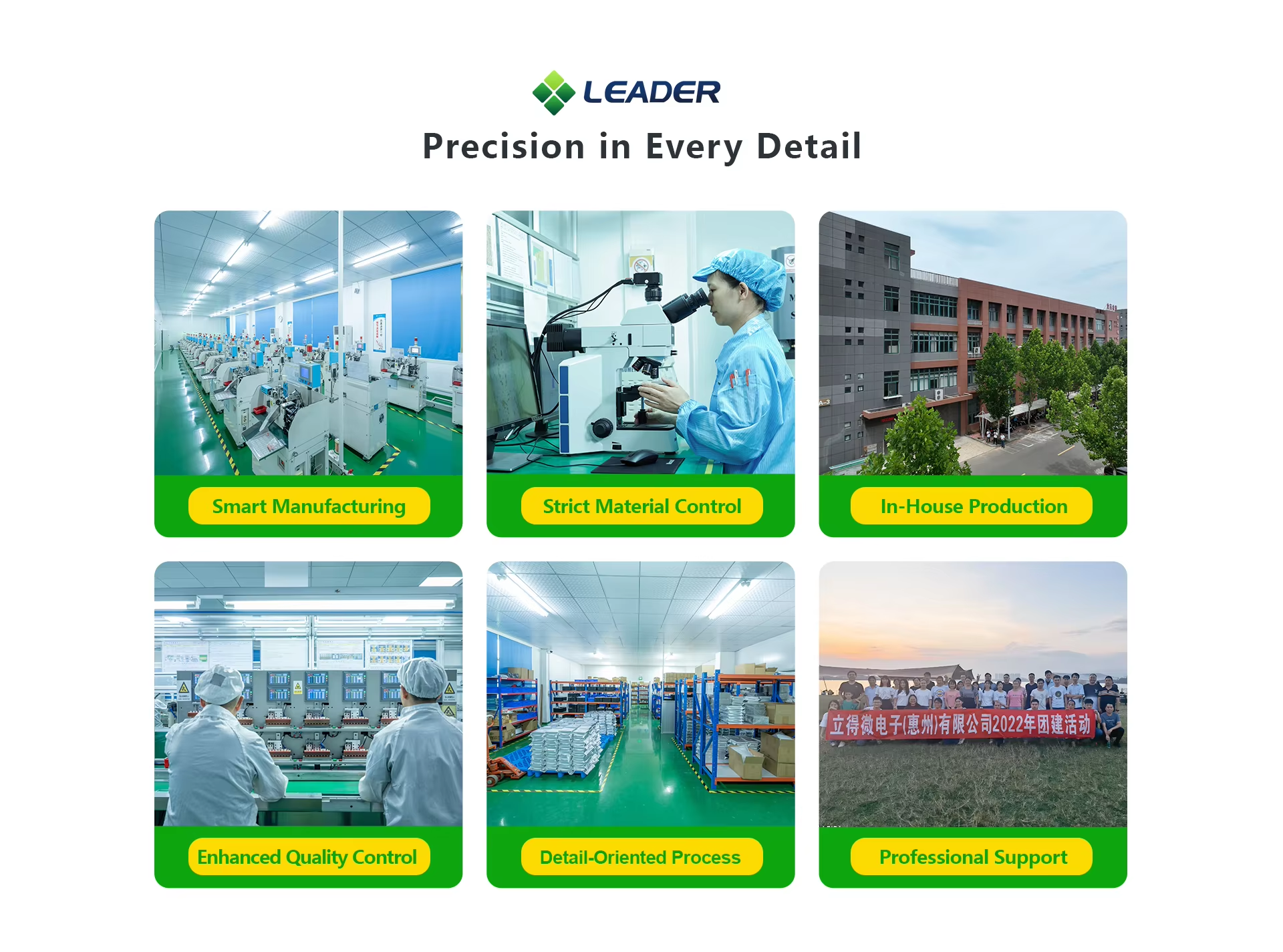
Manufacturing Capability
- Automated assembly equipment
- Production line capacity
- Clean production environment
- Incoming material inspection
- Automated performance testing
- Final inspection and sampling
- Traceability system
- Mass-production experience
A supplier with strong manufacturing capability is more likely to maintain consistent vibration performance from the first batch to mass production.
For vibration motors, consistency matters because parameters such as speed, current, vibration amplitude, resonance frequency and starting characteristics can directly influence the final device experience.

3. Check the Manufacturer's Quality Control System
One of the most important questions is:
How does the manufacturer control motor quality during production?
Don't only ask whether the factory has ISO certification. Ask what is actually tested.
A professional vibration motor manufacturer should have a quality-control process covering multiple stages
Important parameters may include:
- Rated voltage
- Operating current
- Rotation speed
- Vibration amplitude/force
- Resonant frequency
- Start voltage
- Noise
- Lifetime
- Dimensional tolerance
For LRA products in particular, resonant frequency, mounting conditions and driver compatibility can significantly affect actual haptic performance.
4. Look for Real Customization Capability
For OEM projects, a standard catalog motor is not always enough.
Your product may have strict requirements for thickness, diameter, voltage, vibration force or installation method.
A capable custom vibration motor manufacturer should be able to modify or develop solutions around your requirements.
Common Customization Options
|
Custom Requirement |
Example |
| Size | Diameter / thickness / length |
| Electrical | Voltage / resistance / current |
| Vibration | Force / frequency / response |
| Connection | Wire / FPCB / connector |
| Mounting | Adhesive / SMD / spring contact |
| Mechanical | Housing / bracket / special structure |
| Performance | Low noise / long life / fast response |
| Packaging | Tray / tape & reel / customized packing |
Some manufacturers specifically offer customization of wire length, FPC, electrical/mechanical specifications and motor structures.
5. Ask for Samples Before Mass Production
Never select a small vibration motor manufacturer based only on a datasheet.
Request samples and test them inside your actual product structure.
This is especially important for LRA motors because the final vibration experience can change depending on:
- Housing material
- Mounting method
- Adhesive
- PCB structure
- Enclosure stiffness
- Driver circuit
- Contact surface
Even when two motors have similar specifications, they may feel very different in the final device.
6. Evaluate Production Capacity & Supply Stability
A supplier may be excellent at producing 100 samples but struggle with 500,000 pieces.
For B2B and OEM projects, ask:
- What is the monthly production capacity?
- What is the normal lead time?
- Can production capacity scale with demand?
- Is there a backup production plan?
- How are raw materials managed?
- Can the supplier maintain consistent specifications between batches?
Production scalability is especially important when your product moves from EVT/DVT/PVT into mass production.
A reliable partner should be able to support your project throughout the product lifecycle rather than forcing you to change suppliers after commercialization.
Why Choose LEADER as Your Vibration Motor Manufacturing Partner?
For OEM and ODM projects, LEADER focuses on micro vibration motor solutions for compact electronic devices.
Our product portfolio covers ERM vibration motors, LRA linear vibration motors and micro brushless motors, supporting applications including smartphones, wearables, game controllers, medical devices, smart locks and other compact electronics.
The key advantage is not simply having a catalog of motors. For an OEM project, the goal is to find the right combination of:
Motor Technology + Mechanical Design + Electrical Parameters + Mounting + Reliability + Production Capability
This is where a manufacturer's engineering support can make a significant difference.
Conclusion
Choosing a vibration motor manufacturer should not be based on price alone. The right supplier should combine product technology, engineering expertise, quality control, customization capability, testing, production capacity and reliable supply.
For simple vibration alerts, an ERM motor may be sufficient. For fast and precise haptic feedback, an LRA may be a better solution. For applications requiring long operating life, a brushless solution may deserve consideration.
Most importantly, test the motor in your real product structure before making the final decision.
Need help selecting a vibration motor for your project? Share your required size, voltage, application, vibration target and estimated quantity with LEADER, and our engineers can recommend a suitable solution.
Consult Your Leader Experts
We help you avoid the pitfalls to deliver the quality and value your micro brushless motor need, on-time and on budget.
Post time: Jun-23-2026


