
LRA Vibration Motor for Handheld 3D Scanners: LEADER LD0832BC
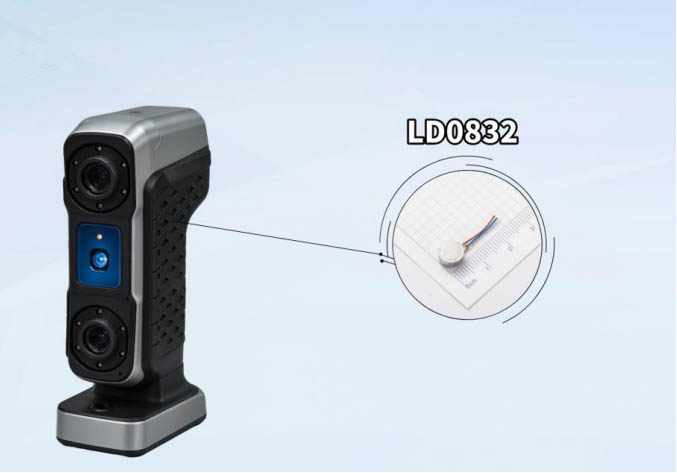
Handheld 3D scanners can use haptic feedback to confirm user input or signal selected operating states without relying only on the display or sound. For scanner designers evaluating a compact LRA, the LEADER LD0832BC measures 8 × 3.2 mm and is designed for integration into space-constrained devices. Final performance depends on the driver, mounting position and scanner housing.
Potential Haptic Feedback Functions in Handheld 3D Scanners
A vibration motor can provide tactile cues when it is connected to the scanner’s control system. The specific alerts and vibration patterns depend on the device’s hardware and software design.
1. Button Press Confirmation
When configured by the scanner’s control system, a brief vibration can confirm that a handle button press has been registered. This gives operators tactile feedback when they are focused on the workpiece or cannot easily check the display.
2. Scan Status Cues
A scanner may assign vibration patterns to selected operating events, such as a change in scanning mode or a tracking warning. These cues are defined by the device manufacturer; the motor provides the vibration output but does not detect or interpret scan data.
3. Warning Alerts
If the scanner’s control system detects a condition that requires the operator’s attention, it may trigger a vibration alert alongside a visual or audio notification. The alert logic and pattern depend on the scanner design.
Why Consider the LEADER LD0832BC for Handheld 3D Scanners
The LEADER LD0832BC is an 8 × 3.2 mm linear resonant actuator (LRA) that scanner designers can evaluate for compact haptic feedback applications. Its suitability depends on the available mounting space, driver, installation position and the vibration feel required in the finished device.
1. Compact 8 × 3.2 mm Format
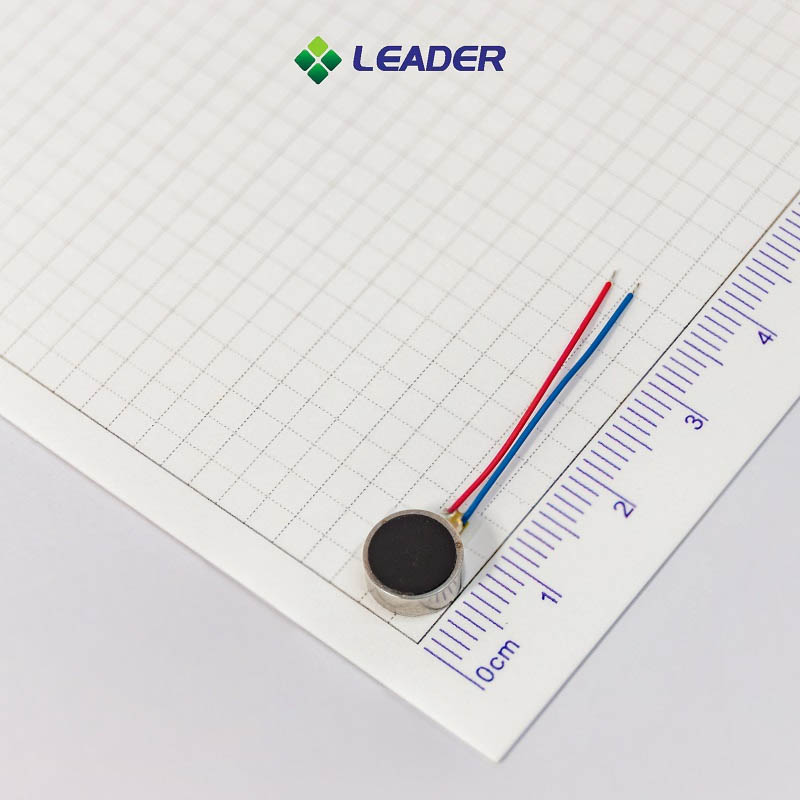
With an 8 × 3.2 mm form factor, the LD0832BC can be considered for handheld devices with limited space for haptic components. Designers should confirm the available cavity, mounting method, vibration direction and clearance from nearby components before integration.
2. LRA Feedback for Controlled Haptic Cues
The LD0832BC operates as an LRA driven by a 1.8 Vrms AC sine wave. A suitable motor driver and scanner control system are needed to produce the intended feedback. The scanner determines when the motor activates; the motor provides the vibration output.
3. Check the Operating Conditions in the Finished Device
Before selecting the motor, evaluate its vibration feel, noise and performance in the actual scanner housing. Mounting position, enclosure design, drive settings and the handle structure can all affect the operator’s perceived feedback. Confirm the required operating environment against the LD0832BC datasheet.
4. Integration and Customization Support
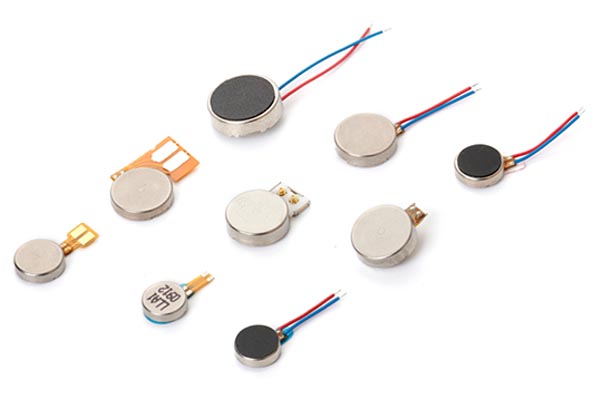
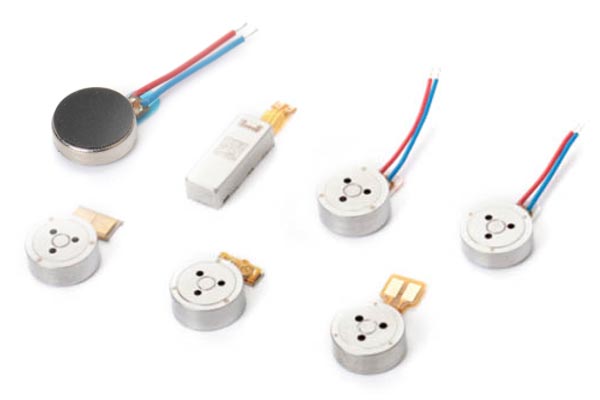
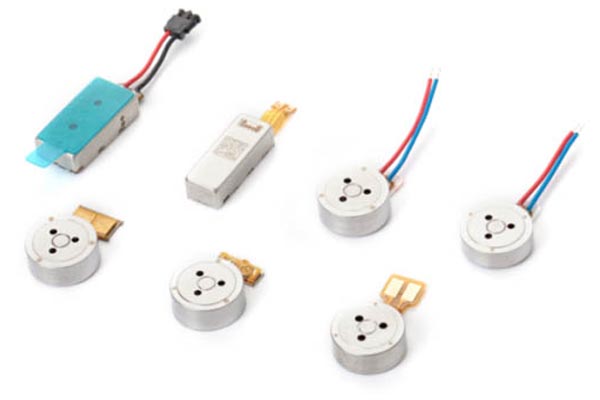
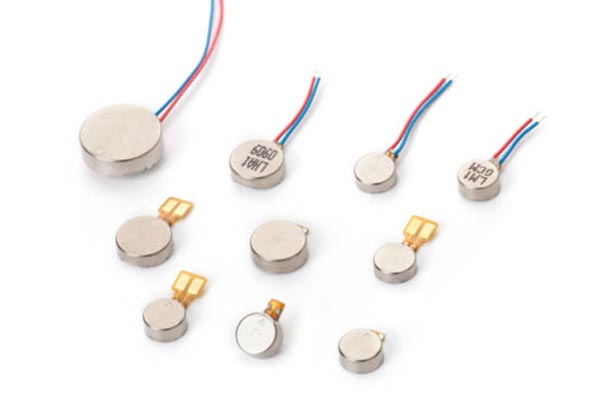
LEADER offers LRA configurations with lead wires, FPCB or spring mounting; wire length and connectors can also be specified. Share the scanner’s space constraints, driver details, target vibration and expected quantity so the motor configuration can be evaluated for the application.
|
Parameter |
Value |
|
Model |
LD0832 |
|
Motor type |
LRA (linear resonant actuator) |
|
Dimensions (mm) |
Φ8 × T3.2 |
|
Vibration amplitude (G) |
1.1 G min (peak); 100g jig |
|
Recommended voltage |
1.7–1.9 V AC sine wave |
|
Rated voltage |
1.8 Vrms AC |
|
Current (mA) |
≤ 85 |
|
Resonance frequency (Hz) |
230 ± 5 |
|
Life |
1 cycle = 2 s on, 1 s off; 850,000 cycles (recoverable stop allowed) |
Share your available mounting space, motor driver requirements, preferred connection type and expected order quantity. LEADER’s team can help assess the LD0832BC configuration for your handheld scanner application.