

This article offers a practical guide for purchasing managers on how to choose the right linear resonant actuator (LRA) based on factors such as frequency, size, power, and application. Learn how to balance performance with cost to ensure the best solution for your project needs.
Introduction to Linear Resonant Actuators (LRA)
What is a Linear Resonant Actuator?
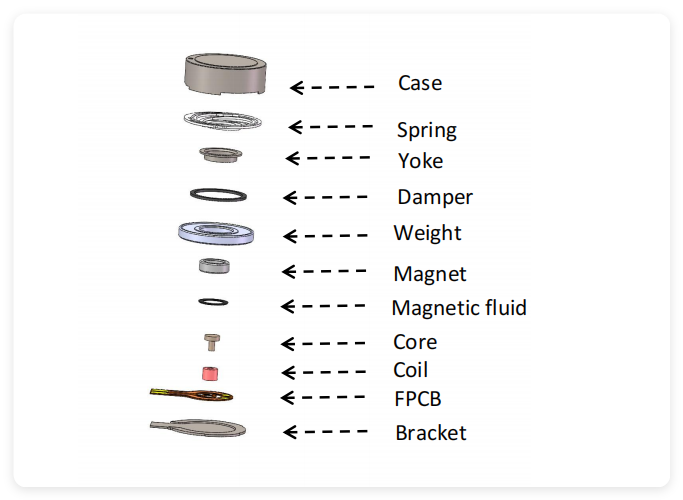
A Linear Resonant Actuator (LRA) is a precision electromagnetic component that converts electrical energy into linear mechanical vibration at its resonant frequency. Unlike traditional eccentric rotating mass motors, LRAs deliver fast response times, precise vibration control, and compact form factors—making them ideal for consumer electronics like beauty instruments, e-cigarettes, and smartwatches. Our Z-axis LRAs are engineered to vibrate along the vertical axis, ensuring efficient tactile feedback and seamless integration into slim device designs.
Importance of Choosing the Right LRA
Selecting the correct LRA is critical to the success of your project. A mismatched actuator can lead to weak vibration, excessive power consumption, integration challenges, or poor user experience. For beauty devices, reliable vibration enhances skincare efficacy; for e-cigarettes, crisp tactile feedback confirms user operations; for smartwatches, precise alerts improve usability. Our LRA motors are purpose-built to address these use cases, balancing performance, size, and cost for optimal results.
Key Factors to Consider When Choosing an LRA
Frequency
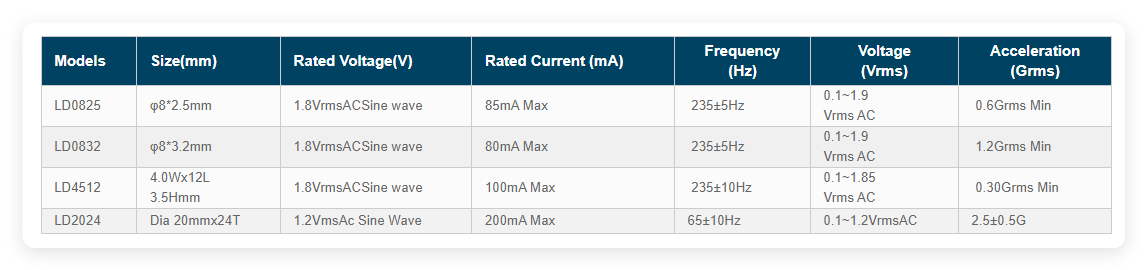
Frequency directly impacts vibration intensity and user perception. Our core LRA models operate at 235±5Hz. This frequency avoids discomfort while ensuring maximum vibration transmission.
Size and Dimensions
Compactness is non-negotiable for modern consumer electronics. Our Z-axis LRAs are available in three industry-leading form factors:
LD0625BC: φ6*2.5mm (ultra-compact for slim smartwatches and mini beauty tools)
LD0825BC: φ8*2.5mm (slightly thicker for high-performance beauty instruments and e-cigarettes)
LD0832BC: φ8*3.2mm (versatile for mid-sized beauty devices and entry-level wearables)
These dimensions are designed to fit seamlessly into your product’s internal layout without compromising functionality.
Power Requirements
Battery life is a top priority for portable devices. Our LRAs feature low-power design:
Rated voltage: 1.8Vrms AC sine wave (compatible with standard portable device power supplies)
Max current: 80–85mA (minimizes energy consumption for extended battery life)
This efficiency is ideal for beauty instruments (long continuous use) and smartwatches/e-cigarettes (limited battery capacity).
Application and Use Cases
Tailor your LRA selection to your specific application:
Beauty Instruments: Z-axis vibration from our LRAs delivers uniform, gentle stimulation for facial massagers and skincare devices, enhancing product absorption. The 235±5Hz frequency is optimized for skin contact.
E-Cigarettes: Crisp, responsive vibration confirms user operations (e.g., puff detection, battery alerts). Our LRAs’ fast response time and stable intensity provide a premium user experience.
Smart Watches: Compact size and low power consumption make our LRAs perfect for notification alerts and touch feedback. The Z-axis design fits the slim profile of modern wearables.
Product Comparison: LRA Types and Models
Our LRA Models
Performance Trade-offs
All three models share Z-axis vibration and 1.8Vrms compatibility for easy integration. The key trade-off is size vs. intensity:
LD0625BC: Smallest footprint, ideal for space-constrained devices but with lower acceleration.
LD0825BC/LD0832BC: Stronger vibration (1.2 Grms) for more impactful feedback.
Making the Right Decision for Your Project
Integrating LRA into Your Product Design
Ou LRAs simplify integration with your design:
Match the model’s dimensions to your device’s available space.
Design a 1.8Vrms AC sine wave drive circuit to activate resonant vibration.
Mount the LRA vertically to maximize Z-axis vibration transmission.
Our engineering team provides free technical support for fixture design and circuit optimization.
Evaluating Total Cost of Ownership (TCO)
Beyond unit cost, consider:
Reliability: Our LRAs use high-quality materials to reduce failure rates and warranty claims.
Efficiency: Low power consumption extends battery life, reducing long-term operational costs.
Supply Stability: Standardized production ensures consistent lead times for mass production.
Conclusion
Choosing the right LRA is essential to delivering a superior user experience for your products. Our LRA motors are engineered to meet the unique demands of these applications, with optimized frequency, size, and power characteristics. Whether you need an ultra-compact actuator for wearables or a high-performance model for beauty devices, our solutions balance performance and cost-effectiveness.
For customized LRA solutions tailored to your project’s specific requirements, contact us today to schedule a consultation with our technical experts. Let us help you select the perfect linear resonant actuator to elevate your product’s performance and user satisfaction.
Consult Your Leader Experts
We help you avoid the pitfalls to deliver the quality and value your micro brushless motor need, on-time and on budget.
Post time: Mar-23-2026


