

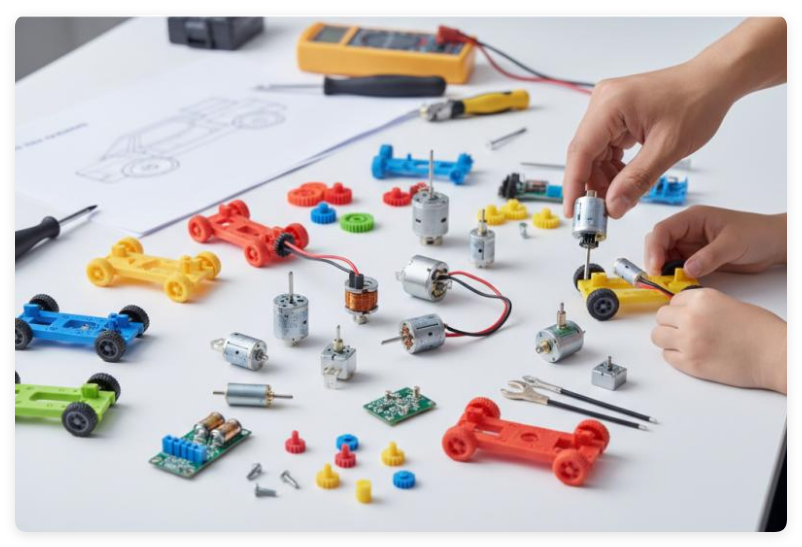
Small toys may look simple, but the right motor makes a big difference in how they move, vibrate, and interact with users. From miniature toy cars and robotic animals to interactive electronic toys, different motor types serve different purposes.
So, what motor is used in small toys? The most common options include miniature DC motors, geared DC motors, coreless motors, brushless DC motors, and micro vibration motors. The best choice depends on whether the toy needs rotational movement, precise positioning, or vibration feedback.
In this guide, we'll explain the main types of small toy motors, their applications, and the key factors manufacturers should consider when selecting a motor for a new toy design.
What Types of Motors Are Used in Small Toys?
Different toys require different types of motion. Here are several common motor options used in small electronic toys.
1. Coreless motors
Coreless motors have a lightweight rotor structure that can support fast acceleration and responsive operation. Their compact design makes them useful in lightweight RC toys, miniature mechanisms, and other applications where weight and response time matter.
2. Brushless DC Motors (BLDC)
Brushless motors eliminate mechanical brushes, reducing brush-related wear. They are commonly considered for higher-performance toys, including drones and advanced RC aircraft, where efficiency, operating life, and speed control are important.
3. Coin Vibration Motors
Coin vibration motors create tactile sensations rather than driving wheels or other mechanical parts. They can make interactive toys buzz, simulate simple movement sensations, or provide feedback when a button is pressed or an action is triggered.
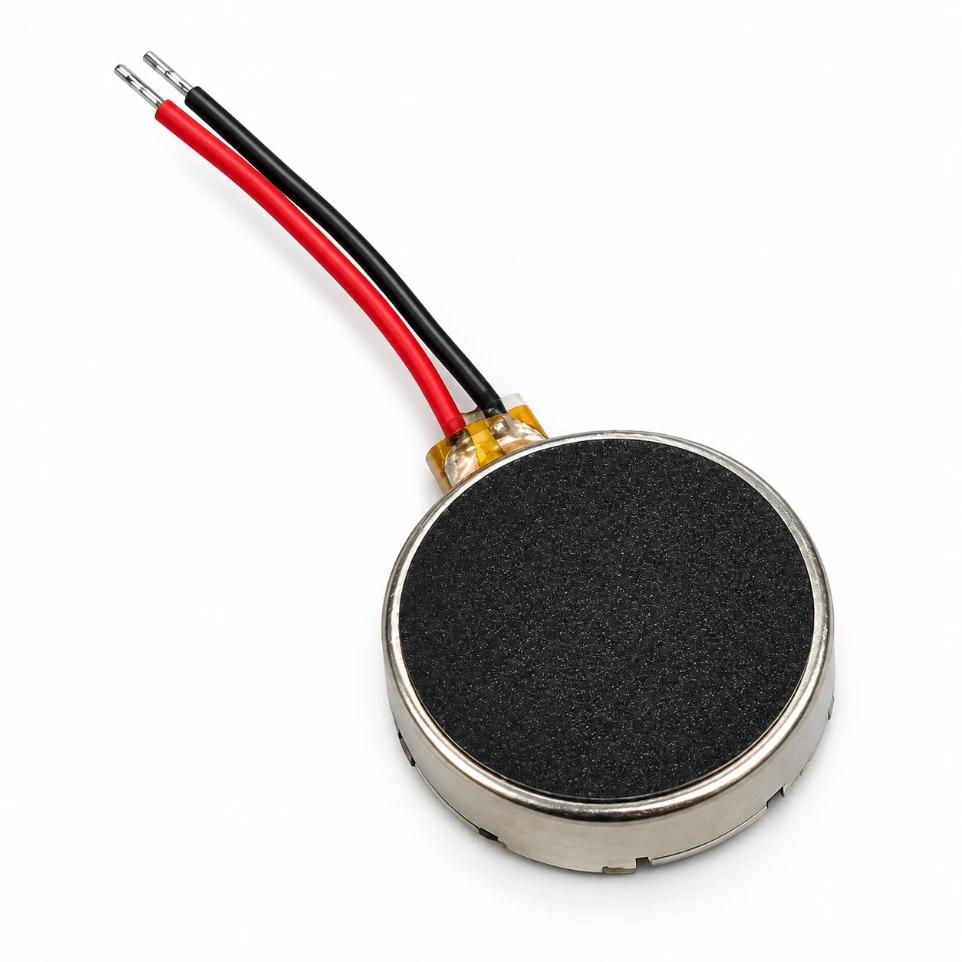
Coin vibration motor
Its flat, compact structure is useful when installation space is limited, such as in slim interactive toys and handheld electronic devices.
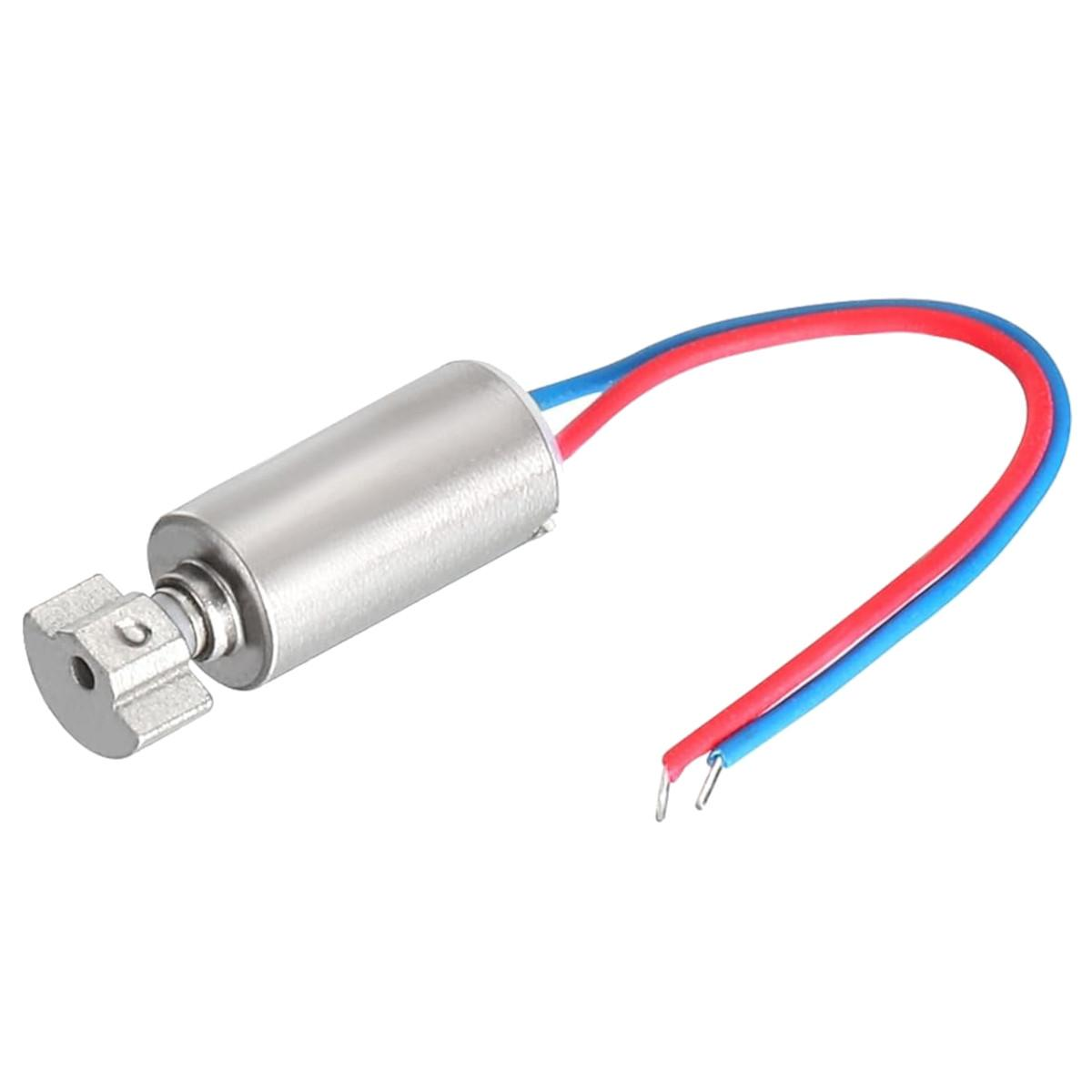
Cylindrical vibration motor
Its cylindrical housing can suit toy designs that have a narrow internal mounting space or require a different motor orientation.
Typical applications
- Interactive robot toys: Add vibration when the robot reacts to a command or completes an action.
- Electronic plush toys: Create simple tactile effects to accompany sound, movement, or touch.
- Handheld electronic toys: Provide physical feedback when users press a button or activate a feature.
- Educational toys: Help make electronic interactions more engaging through tactile responses.
For designers exploring compact motor options, Leader offers small vibration motors and coin vibration motors for different space and integration requirements.
How to Choose the Right Motor for a Small Toy
Choosing a motor involves more than finding the smallest available component. For OEM and ODM toy projects, these five factors are especially important.
1. Size and mounting space
Check the motor's diameter, length, thickness, shaft dimensions, and wire routing. A compact motor is only suitable if it fits the housing and can be securely mounted.
2. Operating voltage and current
Match the motor to the toy's battery and driver circuit. Starting current and loaded current also matter because they affect battery life and circuit design.
3. Required motion or vibration
Consider speed and torque for moving parts, or vibration strength and response for tactile effects. These requirements determine which motor technology is appropriate.
4. Noise and operating life
Gear mechanisms, brush contact, mounting, and the toy enclosure can all affect noise. Test the complete assembly under realistic operating conditions instead of evaluating the motor alone.
5. Cost and production consistency
For mass-produced toys, evaluate unit cost, supply stability, quality control, and customization options together. A slightly different motor specification may improve performance without unnecessarily increasing production cost.
For toys intended for children, also consider applicable product safety requirements, secure motor mounting, battery accessibility, and protection against loose small components.
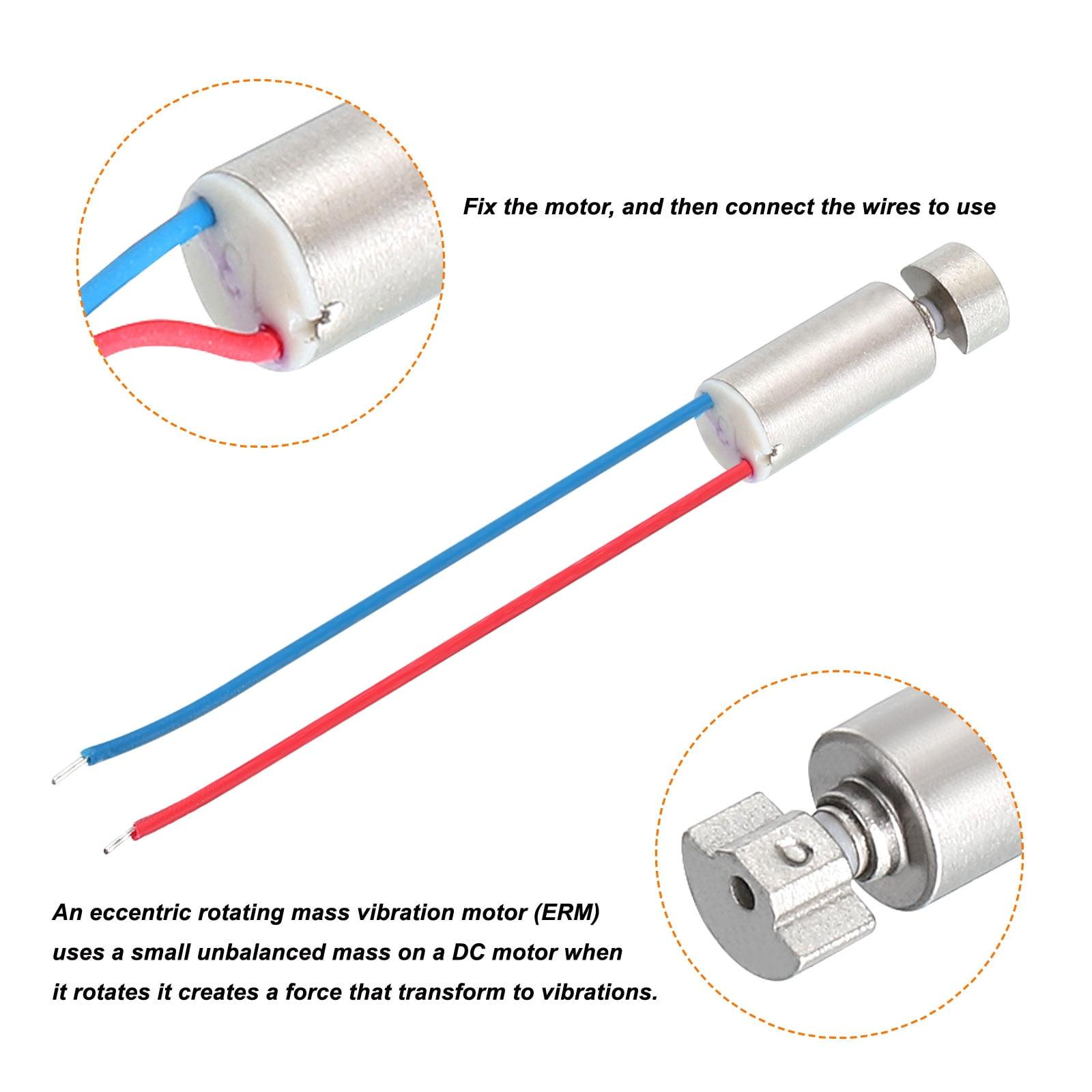
How Does a Vibration Motor Work?
A typical ERM vibration motor operates through a straightforward process:
Step 1 — Electrical power
The battery supplies power to the motor.
Step 2 — Rotation
The motor shaft rotates an eccentric mass.
Step 3 — Vibration
The rotating imbalance generates periodic forces that make the toy vibrate.
The final sensation depends on factors such as motor speed, eccentric mass, mounting stiffness, and the toy's enclosure. Proper integration is therefore essential to achieving consistent vibration performance.
Miniature brushed DC motors are common in battery-powered toys that need rotational movement. Geared motors are useful when greater output torque is required, while vibration motors are suitable for toys that need tactile effects.
A vibration motor primarily generates vibration rather than controlled wheel or joint movement. It can make a lightweight toy shake or create a simple vibration effect, but a DC motor, gear motor, or other actuator is generally more suitable for controlled movement.
They may be suitable for certain electronic toy designs if the vibration requirements, electrical specifications, mounting method, and applicable safety requirements are met. The motor must be securely enclosed, with particular attention to preventing access to small components.
Look for a supplier that provides clear technical specifications, sample evaluation, consistent quality control, and engineering support. For OEM projects, also confirm customization capabilities, production capacity, lead times, and testing procedures.
Find the Right Micro Motor for Your Toy Project
Selecting the right motor early in the design process can help toy manufacturers balance size, performance, battery life, noise, and production cost.
At LEADER, we provide micro vibration motor solutions for compact electronic products and OEM applications. Whether your project requires a flat coin motor or another small vibration motor design, evaluating the motor alongside the complete toy assembly helps achieve a more reliable result.
Explore our product range:
Developing a new electronic toy? Contact LEADER to discuss your motor requirements, available space, operating voltage, vibration performance, and customization needs.
Consult Your Leader Experts
We help you avoid the pitfalls to deliver the quality and value your micro brushless motor need, on-time and on budget.
Post time: Aug-10-2024


