

1. Why Vibration Motors Matter in Wearable Devices
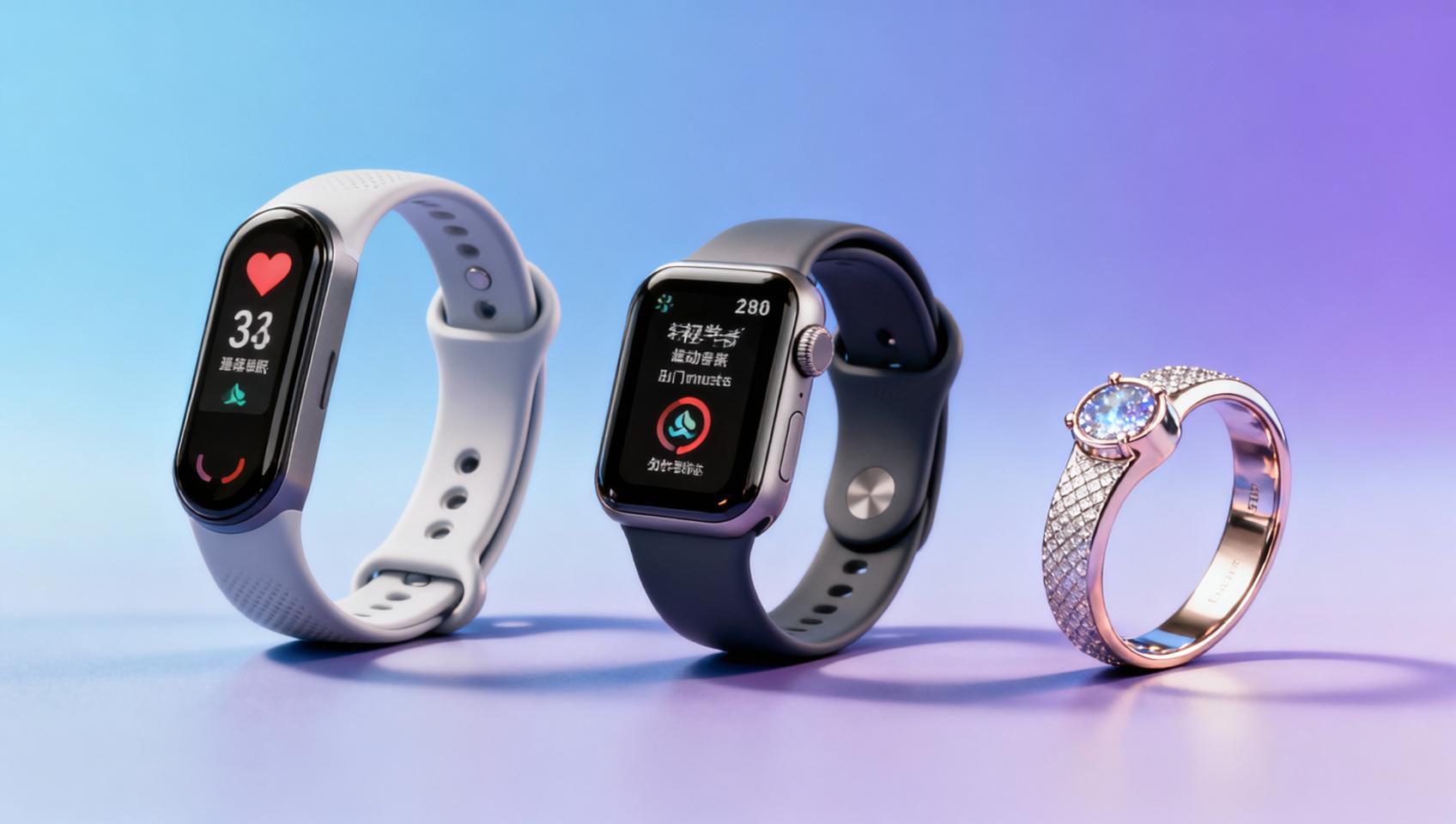
Wearable devices have become an important part of everyday life, from smartwatches and fitness trackers to medical monitoring devices and smart glasses. As these products become smaller and more sophisticated, vibration feedback plays an increasingly important role in user interaction.
A wearable device vibration motor provides tactile notifications without requiring users to look at a screen. It can deliver incoming call alerts, silent reminders, fitness notifications, and precise haptic feedback during operation.
However, selecting a motor for a wearable device is not simply about finding the smallest available component. Engineers must balance several factors:
- Compact size: The motor must fit into limited internal space without affecting the overall product design.
- Vibration performance: It should provide noticeable and consistent feedback despite its small dimensions.
- Low power consumption: Efficient operation helps preserve battery life.
- Response speed: Fast starting and stopping improve the quality of haptic feedback.
- Reliability: The motor must withstand repeated vibration cycles during long-term use.
2. Common Types of Vibration Motors for Wearable Devices
Different wearable products require different vibration characteristics. The two most common electromagnetic solutions are ERM and LRA vibration motors, while brushless motor technology can also be considered for specific applications.
2.1 ERM Vibration Motors
ERM (Eccentric Rotating Mass) motors generate vibration through an off-center rotating weight. As the motor rotates, the unbalanced mass creates mechanical vibration.
ERM motors are widely used in compact electronic products because of their relatively simple driving requirements and cost-effective design.
Key advantages:
- Simple control using DC voltage or PWM signals.
- Available in compact coin and cylindrical structures.
- Suitable for basic vibration notifications.
- Flexible integration into different product housings.
Best applications: Entry-level smartwatches, fitness trackers, basic wearable notifications, and cost-sensitive electronic devices.
One consideration is that ERM motors generally take longer to accelerate and stop than LRAs. This can make precise vibration patterns more difficult to achieve.

2.2 LRA Linear Vibration Motors
LRA (Linear Resonant Actuator) motors generate vibration through the reciprocating movement of an internal mass rather than continuous rotation.
They are particularly suitable for wearable devices that require fast, controlled, and consistent haptic feedback.
Key advantages:
- Fast response and stopping characteristics.
- Precise vibration patterns.
- Good energy efficiency when operated near resonance.
- No rotating eccentric weight.
- Suitable for premium haptic interfaces.
LRAs generally require an appropriate AC drive signal and are commonly paired with a dedicated haptic driver.
Best applications: Premium smartwatches, advanced fitness trackers, medical wearables, and devices requiring more refined tactile feedback.

2.3 Brushless Vibration Motors
Brushless vibration motors use electronic commutation instead of mechanical brushes. This structure can reduce brush-related wear and support long-term operation.
For wearable applications, miniature brushless motors can be considered when product designers prioritize durability, compact construction, and stable performance.
Best applications: Compact smart devices, specialized wearable electronics, and products with demanding operating-life requirements.
ERM vs LRA vs Brushless: Quick Comparison
| Feature | ERM | LRA | Brushless |
|---|---|---|---|
| Working principle | Rotating eccentric mass | Linear reciprocating movement | Electronic commutation |
| Response | Relatively slower | Fast and precise | Depends on design |
| Control | Simple DC/PWM | Dedicated AC drive | Electronic control |
| Haptic precision | Basic to moderate | High | Application-dependent |
| Power efficiency | Application-dependent | Good near resonance | Application-dependent |
| Typical advantage | Cost-effective | Refined feedback | Reduced brush wear |
3. How to Choose the Right Motor Size for Wearable Devices
Size is one of the most important considerations when selecting a wearable vibration motor. Unlike smartphones or larger electronic products, wearables have limited internal space and strict weight requirements.
A motor that is too large may affect the product's thickness, battery layout, and wearing comfort. However, choosing an extremely small motor without evaluating its output may result in weak vibration that users cannot easily feel.
3.1 Coin Vibration Motors: A Compact Solution
Coin vibration motors feature a flat, circular structure that makes them suitable for thin and compact electronic products.
Their low-profile design allows engineers to integrate them into smartwatches, fitness bands, and other wearable devices without requiring excessive vertical space.
Depending on the design, coin motors are available in both ERM and LRA configurations.
Why choose a coin motor?
- Flat structure for space-constrained products.
- Convenient integration into compact housings.
- Suitable for different mounting arrangements.
| Models | Size(mm) | Rated Voltage(V) | Rated Current (mA) | Rated(RPM) | Voltage(V) |
| LCM0720 | φ7*2.0mm | 3.0V DC | 85mA Max | 13000±3000 | DC2.5-3.3V |
| LCM0820 | φ8*2.0mm | 3.0V DC | 85mA Max | 15000±3000 | DC2.5-3.3V |
| LCM0825 | φ8*2.5mm | 3.0V DC | 85mA Max | 13000±3000 | DC2.5-3.3V |
| LCM0827 | φ8*2.7mm | 3.0V DC | 85mA Max | 13000±3000 | DC2.5-3.3V |
| LCM0830 | φ8*3.0mm | 3.0V DC | 85mA Max | 13000±3000 | DC2.5-3.3V |
| LCM0834 | φ8*3.4mm | 3.0V DC | 85mA Max | 13000±3000 | DC2.5-3.3V |
| LCM1020 | φ10*2.0mm | 3.0V DC | 85mA Max | 13000±3000 | DC2.5-3.3V |
| LCM1027 | φ10*2.7mm | 3.0V DC | 85mA Max | 13000±3000 | DC2.5-3.3V |
| LCM1030 | φ10*3.0mm | 3.0V DC | 85mA Max | 13000±3000 | DC2.5-3.3V |
| LCM1034 | φ10*3.4mm | 3.0V DC | 85mA Max | 13000±3000 | DC2.5-3.3V |
| LCM1034S | φ10*3.4mm | 2.0V DC | 85mA Max | 11500±3500 | DC1.5-3.0V |
| LCM1234 | φ12*3.4mm | 3.0V DC | 100mA Max | 11000±3000 | DC3.0-4.0V |
3.2 Cylindrical Vibration Motors: An Alternative for Compact Designs
Cylindrical vibration motors feature a narrow, elongated structure. They can be useful when the available installation space is limited in one direction but provides sufficient length in another.
They are often considered for compact electronics where the internal mechanical layout supports this form factor.
3.3 Size Is Not the Only Performance Indicator
A smaller motor does not automatically mean better performance.
Motor output is influenced by several factors, including eccentric mass, internal mechanical structure, operating voltage, resonance characteristics, and mounting conditions.
For example, a slightly larger motor may produce more noticeable vibration at a lower operating level than a smaller motor pushed close to its performance limit.
Therefore, engineers should evaluate the motor together with the actual wearable housing rather than relying on dimensions alone.
4. Key Performance Factors When Selecting a Wearable Vibration Motor
After confirming the available installation space, engineers should evaluate the following performance characteristics.
4.1 Vibration Strength and Acceleration
Vibration strength determines how clearly users can feel an alert or notification.
For a smartwatch, vibration must be strong enough to be noticed during daily activities without becoming uncomfortable. For a medical wearable, the feedback may need to be more subtle and controlled.
Acceleration, usually expressed in g, is one useful measurement for comparing vibration output. However, the perceived intensity also depends on the device's weight, contact area, enclosure structure, and how it is worn.
It is best to evaluate vibration performance through prototype testing rather than relying entirely on motor specifications.
4.2 Response Time
Response time affects how quickly a motor starts and stops after receiving a control signal.
This is particularly important for premium wearables that use different vibration patterns for calls, messages, alarms, and interactive functions.
LRAs are often preferred for applications requiring fast and precise haptic effects. For example, a short vibration pulse can provide a clearer confirmation when a user taps a smartwatch screen.
4.3 Power Consumption
Wearable devices usually operate with small rechargeable batteries. Excessive motor current can reduce battery life and affect the overall power budget.
When evaluating power consumption, engineers should consider:
- Rated voltage and operating voltage range.
- Starting current and running current.
- Vibration duration and activation frequency.
- Driver efficiency and control strategy.
- Standby power consumption of the driving circuit.
A motor should provide sufficient tactile feedback without consuming more energy than necessary.
4.4 Operating Lifetime and Reliability
Wearable devices may generate dozens or even hundreds of vibration events per day. Therefore, motor reliability is essential.
Important factors include mechanical wear, internal component stability, mounting strength, soldering reliability, and resistance to repeated operating cycles.
For OEM projects, manufacturers should provide relevant lifetime test conditions and performance data rather than relying only on a general lifetime claim.
4.5 Noise and User Comfort
A wearable motor should create tactile feedback without producing excessive audible noise.
This is particularly important for smartwatches and medical wearables used in quiet environments.
The motor's mounting position, housing resonance, and contact between internal components can all influence the final noise level. Testing the complete device is essential.
5. Recommended Vibration Motors for Different Wearable Applications
Different wearable products have different requirements. The following table provides a practical starting point for motor selection.
| Wearable Application | Recommended Motor Type | Main Priority |
|---|---|---|
| Smartwatch | Coin ERM / Coin LRA | Compact size and clear notifications |
| Fitness Tracker | Coin ERM / Coin LRA | Low power and reliable alerts |
| Smart Ring | Customized miniature actuator | Extremely limited installation space |
| Medical Wearable | Coin LRA / Miniature ERM | Consistent and controlled feedback |
| Smart Glasses | Miniature LRA | Precise and discreet notifications |
| Wireless Wearable Accessories | Miniature ERM / LRA | Flexible integration and low power |
Smartwatches and Fitness Trackers
Smartwatches need vibration feedback for incoming calls, messages, alarms, and interactive operations. A compact coin motor is often a practical choice because its flat structure fits well into slim product housings.
For premium products, an LRA can offer more precise vibration patterns and a refined user experience.
Medical Wearable Devices
Medical wearables may use vibration to provide reminders, alerts, and operation feedback.
Consistency and reliability are particularly important. Designers should evaluate vibration intensity, operating lifetime, and performance stability under actual usage conditions.
Smart Rings and Compact Wearables
Smart rings and other ultra-small wearable devices present more demanding space constraints.
The actuator must be carefully matched to the available internal volume, battery capacity, and contact position. Customized motor dimensions or connection structures may be necessary to achieve the required performance.
6. Design Considerations for OEM Wearable Projects
Choosing the right motor is only the first step. Successful integration requires cooperation between the motor manufacturer, electronics engineers, and product design team.
Before finalizing a motor, OEM buyers should confirm the following details.
1. Available Installation Space
Provide the motor's maximum diameter, thickness, and surrounding clearance. The manufacturer can then recommend suitable motor structures or customized dimensions.
2. Electrical Specifications
Confirm rated voltage, operating voltage, current consumption, and driver requirements. These parameters should match the device's battery and control circuit.
3. Mechanical Mounting
The mounting method directly affects vibration transmission. Adhesive mounting, soldering, spring contacts, and customized FPCB connections may be considered depending on the motor structure.
4. Vibration Performance
Define the expected vibration strength, response time, operating frequency, and preferred tactile feeling. Whenever possible, test samples inside the actual product housing.
5. Lifetime and Quality Testing
Discuss operating-life expectations, environmental conditions, and production quality requirements with the motor supplier. Relevant validation may include lifetime cycling, electrical testing, vibration consistency, and temperature testing.
Working with an experienced miniature vibration motor manufacturer during the early design stage can help reduce integration risks and unnecessary redesign costs.
7. Why Choose LEADER for Wearable Vibration Motor Solutions?
LEADER specializes in miniature vibration motor manufacturing and provides OEM/ODM solutions for customers developing compact electronic products.
Our product portfolio covers different vibration motor technologies and structures, helping customers find suitable solutions for different wearable applications.
LEADER's capabilities include:
- Miniature Motor Solutions: Different motor structures and dimensions for compact electronic products.
- LRA Customization: Linear motor solutions designed for precise and responsive haptic feedback.
- Brushless Motor Technology: Miniature brushless motor options for applications requiring long operating life.
- OEM/ODM Support: Customized dimensions, electrical specifications, connection structures, and application-oriented solutions.
- Quality and Reliability Testing: Product validation to support consistent performance and long-term applications.
Whether you are developing a smartwatch, fitness tracker, medical wearable, or another compact electronic device, LEADER can help evaluate suitable vibration motor solutions based on your project requirements.
Explore our small vibration motors, coin vibration motors, and custom linear motor solutions.
Coin vibration motors are a popular choice because of their compact, flat structure. ERM motors are suitable for basic notifications, while LRA motors are often preferred for premium wearables requiring faster and more precise haptic feedback.
The available dimensions depend on the motor technology and design. Miniature motors can be developed in compact diameters and thicknesses, but the smallest option is not necessarily the best. Engineers should balance installation space with vibration output and power consumption.
Not necessarily for every product. LRA motors offer more precise vibration control and faster response, making them suitable for advanced haptic applications. ERM motors are generally easier to drive and can be a cost-effective solution for basic notifications.
Start by selecting a motor with suitable output characteristics. Then evaluate its mounting position, mechanical contact, enclosure structure, and driver settings. Testing the complete device is important because housing design can significantly influence perceived vibration strength.
Yes. Depending on the manufacturer and motor structure, customization may include motor dimensions, rated voltage, connection methods, FPCB design, vibration characteristics, and other integration requirements.
Look for a manufacturer with miniature motor development capabilities, relevant product experience, quality testing procedures, and OEM/ODM engineering support. Sample testing and technical communication are also important before mass production.
Conclusion
Selecting a vibration motor for wearable devices requires more than simply comparing motor dimensions. Engineers need to consider vibration strength, response speed, power consumption, reliability, and mechanical integration together.
Coin ERM motors remain a practical option for compact and cost-sensitive products, while LRA motors provide more precise haptic feedback for advanced wearable applications.
By evaluating motor performance during the early design stage and working with an experienced manufacturer, OEM buyers can achieve a better balance between compact design and user experience.
Looking for a miniature vibration motor for your next wearable project? Contact LEADER to discuss your application and customized motor requirements.
Consult Your Leader Experts
We help you avoid the pitfalls to deliver the quality and value your micro brushless motor need, on-time and on budget.
Post time: Oct-29-2025


