

Introduction: ERM vs LRA – Why Does the Difference Matter?
Vibration feedback has become an important feature in smartphones, smartwatches, gaming controllers, wearable devices, and smart home products.
However, not all vibration motors work in the same way. The two most common technologies are ERM (Eccentric Rotating Mass) and LRA (Linear Resonant Actuator).
Both generate vibration, but their operating principles, response characteristics, control requirements, and user experiences are quite different.
So, which one should you choose?
The answer depends on your product's performance requirements, available space, power budget, and target user experience. This guide compares ERM and LRA vibration motors to help engineers and OEM buyers make a more informed decision.
1. What Is an ERM Vibration Motor?
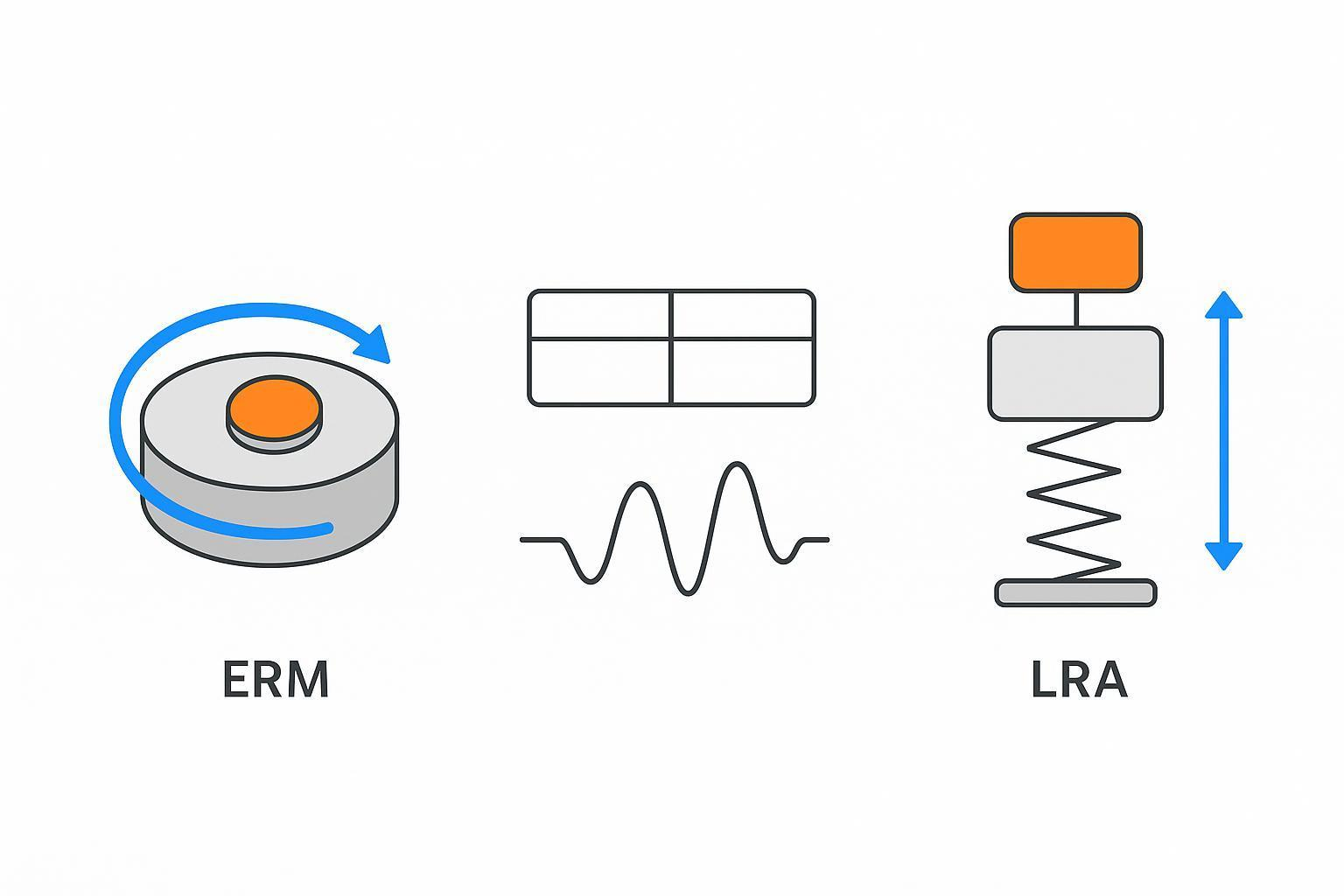
An ERM vibration motor uses an eccentric rotating mass attached to its motor shaft. When the motor rotates, the uneven weight creates centrifugal force, producing vibration.
ERM motors are commonly available in cylindrical and coin-shaped designs, making them suitable for compact electronic devices.
How does it work?
- Electrical power drives the motor.
- The motor shaft rotates the eccentric weight.
- The rotating mass generates centrifugal force.
- The force creates vibration that can be felt by the user.
The vibration intensity is generally related to the motor's rotational speed and the eccentric mass.

Key advantages of ERM motors
- Simple control: ERM motors can generally be driven using straightforward voltage or PWM control.
- Cost-effective: Their relatively simple construction makes them a practical choice for cost-sensitive products.
- Flexible packaging: Coin and cylindrical versions support different installation requirements.
- Wide application range: They are widely used in consumer electronics, toys, handheld devices, and notification systems.
Potential limitations: ERM motors typically have slower start-up and braking responses because the rotor needs time to accelerate and decelerate. Their vibration frequency also changes with motor speed.
2. What Is an LRA Vibration Motor?
An LRA (Linear Resonant Actuator) generates vibration through the linear movement of an internal moving mass rather than continuous rotation.
Inside an LRA, a moving mass is suspended by an elastic structure and driven by an electromagnetic force. When the actuator operates near its resonant frequency, the mass moves back and forth, producing vibration.
Unlike ERM motors, LRAs are designed to operate around a specific resonant frequency.
How does it work?
- An electrical signal is supplied to the actuator.
- An electromagnetic force drives the internal moving mass.
- The mass moves back and forth along a linear axis.
- The movement generates tactile feedback.

Key advantages of LRA motors
- Fast response: LRA motors can deliver rapid vibration feedback when paired with suitable drive electronics.
- Precise haptic control: They support more controlled vibration effects and patterns.
- Consistent operating frequency: Their resonant operating principle helps maintain a defined vibration frequency.
- Premium tactile experience: They are particularly suitable for products requiring refined, responsive haptic feedback.
Potential limitations: LRAs generally require a dedicated driver or suitable control circuit. Their performance is also sensitive to resonance matching, mechanical mounting, and drive-signal settings.
3. ERM vs LRA Vibration Motors: Key Differences
This is the most important comparison for product designers and purchasing teams.
| Comparison | ERM Motor | LRA Motor |
|---|---|---|
| Full name | Eccentric Rotating Mass | Linear Resonant Actuator |
| Working principle | Rotating eccentric weight | Linear reciprocating mass |
| Vibration frequency | Changes with motor speed | Designed around resonance |
| Response | Generally slower | Generally faster |
| Braking | Rotor deceleration required | Can achieve rapid controlled stopping |
| Control method | Voltage / PWM | AC drive signal / dedicated driver |
| Control complexity | Relatively simple | More demanding |
| Vibration experience | General vibration | More precise haptic feedback |
| Cost | Generally lower | Generally higher |
| Typical applications | Toys, basic notifications | Smartphones, wearables, gaming |
Which Motor Has a Faster Response?
One of the biggest differences between ERM and LRA motors is response time.
ERM motors need to accelerate their rotating mass before reaching the desired vibration intensity. When switched off, the rotor also needs time to slow down.
LRA motors can respond quickly because their moving mass is driven directly by electromagnetic force. With an appropriate driver and control signal, they can produce sharper vibration feedback and more precise vibration patterns.
For applications such as smartphone keyboard feedback, touchscreen interactions, and gaming controllers, response speed can significantly influence the user experience.
Which Motor Provides Better Vibration Quality?
ERM motors are suitable for general vibration alerts, where the main requirement is simply to let users know that an event has occurred.
LRA motors are better suited to applications that require more refined tactile feedback. They can produce controlled vibration effects that feel more deliberate and consistent.
However, actual vibration strength and quality depend on motor dimensions, mounting conditions, drive electronics, and product structure—not simply whether the motor is ERM or LRA.
4. ERM vs LRA: Which Applications Are Best?
Different products have different vibration requirements. Here are some typical applications.
Smartphones
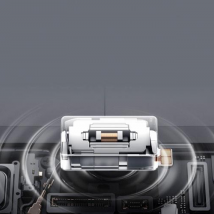
LRA motors are often preferred for premium smartphones because they deliver responsive and refined haptic feedback for typing, notifications, and system interactions.

Smartwatches and Wearables
Both technologies can work. ERM is suitable for basic alerts, while compact coin LRAs are a good choice for more precise haptic experiences.

Gaming Controllers
LRA motors are suitable for responsive and detailed tactile effects, while ERM motors remain useful for conventional rumble feedback.
Toys and Basic Electronic Devices
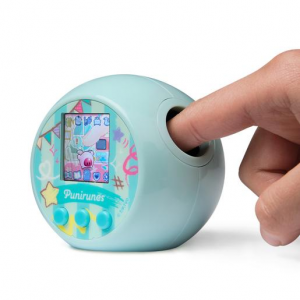
ERM motors are often a practical solution because of their simple control requirements and cost-effective design.
5. How to Choose Between ERM and LRA Motors?
Choosing the right vibration motor requires more than comparing price or vibration strength. Here are five important factors to consider before finalizing your design.
1. Define Your Haptic Experience
First, consider what kind of feedback your product needs.
- For simple vibration alerts and notifications, ERM is usually sufficient.
- For sharp, responsive feedback and more refined tactile effects, LRA is generally the better option.
2. Consider Your Budget
ERM motors are often more economical because they have simpler drive requirements. LRA motors may involve additional driver IC costs and more development work.
However, if haptic quality is an important product selling point, investing in an LRA solution can provide greater value.
3. Check Available Installation Space
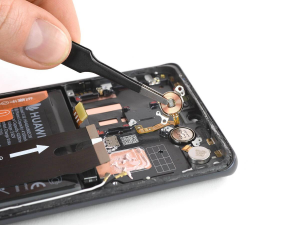
Both ERM and LRA motors are available in compact designs. However, the motor's diameter, thickness, vibration direction, wiring, and mounting method must all be considered.
For thin wearable devices, coin-type motors are worth evaluating. For specialized applications, customized LRA dimensions may offer greater design flexibility.
4. Evaluate Power Consumption
Power consumption depends on the motor specification, drive voltage, operating duration, and control circuit.
LRAs can operate efficiently near their resonant frequency, while ERM motors generally consume power according to their operating speed and load. Compare actual current consumption under the intended operating conditions rather than relying only on technology labels.
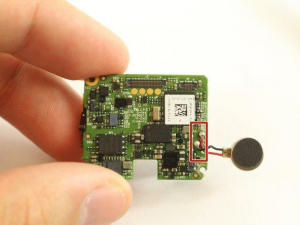
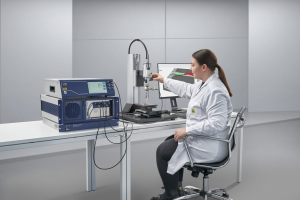
5. Test the Motor in the Final Product
A motor's performance on a test bench may differ from its performance after installation.
The enclosure, mounting position, adhesive, PCB, and surrounding materials can all affect vibration transmission. Always evaluate the complete device before mass production.
6. ERM vs LRA: A Quick Decision Guide
Which vibration motor should you choose?
Choose ERM if:
- Your product needs basic vibration alerts.
- Cost is a major consideration.
- You prefer simple motor control.
- Complex haptic effects are unnecessary.
Choose LRA if:
- Fast response is important.
- You need precise tactile feedback.
- Your product targets a premium user experience.
- You can accommodate a dedicated haptic driver.
The bottom line: ERM is a practical solution for basic vibration, while LRA is often the better choice for modern devices that prioritize responsive and refined haptic feedback.
Not necessarily. LRA motors are generally better for responsive and controlled haptic feedback, while ERM motors are more suitable for cost-sensitive products requiring basic vibration. The best option depends on your application.
An LRA requires an appropriate AC drive signal near its resonant frequency. A dedicated haptic driver IC is commonly used to generate and control this signal. Simply connecting an LRA to a standard DC power supply will not provide normal operating performance.
LRA motors can offer better power efficiency when operated near resonance with suitable drive electronics. However, actual power consumption depends on the motor design, drive conditions, and operating pattern.
Both technologies can produce noticeable vibration, but their output characteristics are different. Actual acceleration and perceived intensity depend on motor dimensions, eccentric mass or moving mass, drive conditions, and mechanical installation.
Yes. Compact coin-type and other small-format LRAs are widely suitable for smartwatches, fitness trackers, and other wearable electronics where responsive haptic feedback is required.
Yes. Depending on the manufacturer and design requirements, customization may include dimensions, vibration direction, electrical parameters, connection type, and mechanical structure. Early communication with the motor manufacturer can help reduce integration risks.
9. Why Choose LEADER for Your Vibration Motor Project?
Choosing the right motor manufacturer is just as important as choosing the right motor technology.
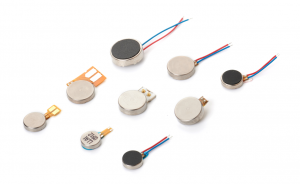
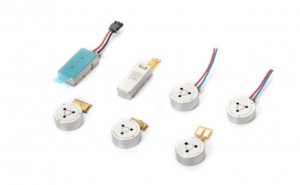
At LEADER, we specialize in micro vibration motor manufacturing and customized haptic solutions for OEM and ODM customers.
Whether your project requires a cost-effective ERM motor or a high-performance LRA motor, our team can help evaluate the appropriate solution based on your product's design and performance requirements.

Our capabilities include:
- Customized motor dimensions and mechanical structures.
- Different vibration strengths and electrical specifications.
- Flexible connection options, including FPCB and wire leads.
- Product testing and quality control.
- OEM and ODM support for different industries.
Explore our solutions:
Looking for the right vibration motor for your next project?
Contact LEADER to discuss your requirements and find a suitable vibration solution for your application.
Consult Your Leader Experts
We help you avoid the pitfalls to deliver the quality and value your micro brushless motor need, on-time and on budget.
Post time: Apr-17-2026


