

Introduction: Why Feedback Technology Matters
Modern electronic devices need more than visual displays and sound to communicate with users. From the subtle click of a smartphone touchscreen to the immersive vibration of a gaming controller, physical feedback helps users interact with digital products more naturally.
Two terms frequently appear in product development: haptic feedback and tactile feedback. Although they are often used interchangeably, they do not always describe exactly the same thing.
For engineers, product designers, and OEM buyers, understanding the distinction helps clarify actuator selection, mechanical integration, control requirements, and the final user experience.
In this guide, we explain how haptic and tactile feedback work, compare their applications, and explore how ERM motors, linear resonant actuators (LRAs), and piezoelectric actuators support different feedback requirements.
1. What Is Haptic Feedback?
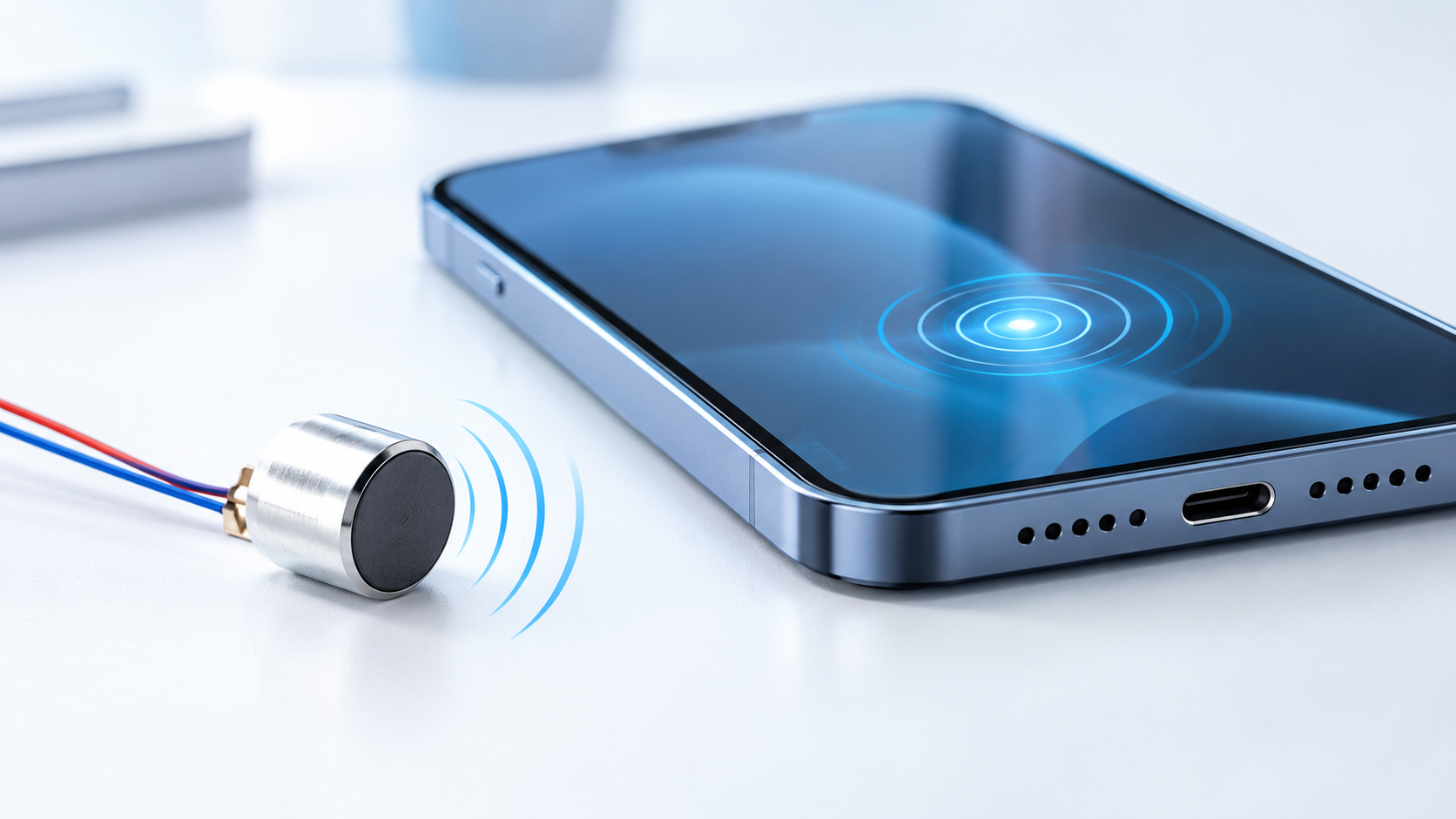
Haptic feedback is a technology that uses physical sensations to communicate information to a user. These sensations can include vibration, movement, pressure, resistance, or force.
In consumer electronics, vibration-based haptics are particularly common. A smartphone may produce a short vibration when a message arrives, while a gaming controller can generate different vibration patterns to represent impacts, movement, or environmental effects.
Haptic feedback can improve usability by making digital interactions feel more responsive. It can also reduce the need to look at a screen continuously, which is useful in wearables, automotive interfaces, and industrial controls.
2. What Is Tactile Feedback?
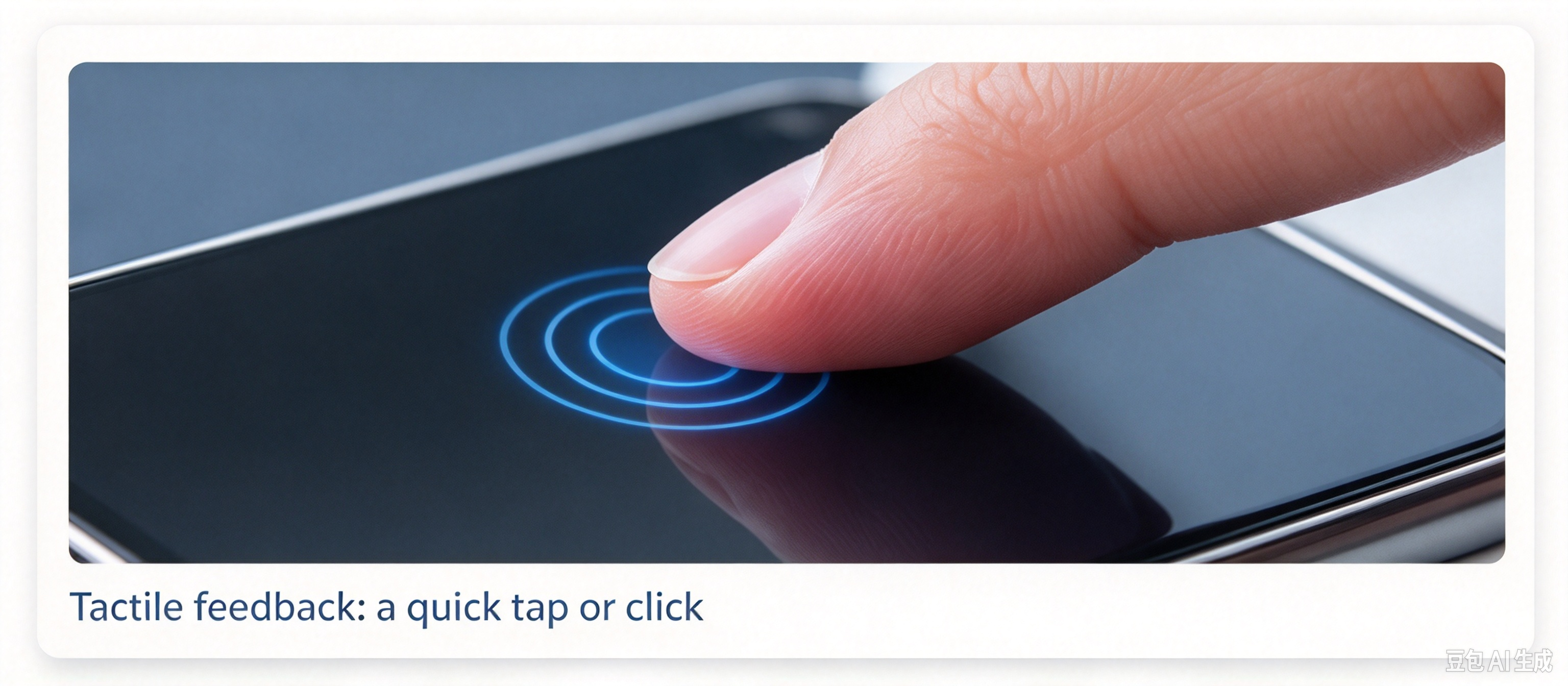
Tactile feedback refers more specifically to sensations perceived through touch. It helps users recognize contact, confirm an action, or distinguish between different physical interactions.
A mechanical keyboard provides tactile feedback through the physical movement and resistance of its keys. A touchscreen can simulate a button press through a brief vibration, even though the display itself has no moving mechanical button.
In electronic products, tactile feedback may be generated by vibration motors, piezoelectric actuators, mechanical switches, or specially designed surface structures.
3. Haptic Feedback vs Tactile Feedback: Key Differences
The main distinction is the scope of the terms. Haptic feedback is the broader concept of communicating through physical sensation, while tactile feedback focuses on sensations experienced through touch.
Tactile feedback can therefore be considered one form of haptic feedback.
|
Comparison |
Haptic Feedback |
Tactile Feedback |
| Definition | Broad category of touch-related physical feedback | Feedback specifically perceived through touch |
| Sensations | Vibration, force, motion, pressure, and touch | Clicks, taps, texture, and localized vibration |
| Main objective | Improve interaction, immersion, or communication | Confirm actions and communicate touch-related information |
| Common devices | Gaming controllers, smartphones, VR systems, automotive interfaces | Touchscreens, buttons, keyboards, wearables |
| Possible technologies | ERM, LRA, piezo, force-feedback actuators | Mechanical switches, ERM, LRA, piezo |
| Design priority | Realistic, expressive, or informative sensations | Clear, recognizable, and appropriately localized sensations |
Engineering note: These terms do not define two mutually exclusive hardware categories. The same LRA motor can produce a short tactile click or contribute to a more complex haptic effect, depending on how the system is designed and controlled.
4. Haptic Actuator Technologies: ERM vs LRA vs Piezo
Selecting an actuator is one of the most important engineering decisions in a haptic feedback project. Different technologies offer different trade-offs in response, controllability, package size, cost, and integration complexity.
ERM Motors: A Practical Choice for Basic Vibration
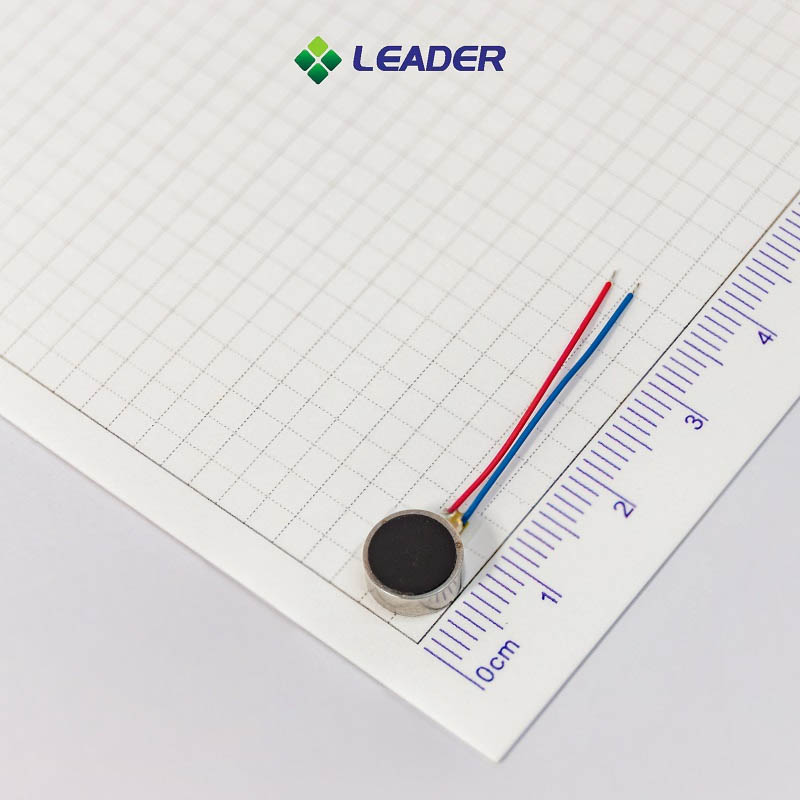
An eccentric rotating mass (ERM) motor generates vibration by rotating an off-center weight. This imbalance creates mechanical oscillation that can be transferred to the device housing.
ERM motors are widely used in notification systems, entry-level wearables, and other products that need straightforward vibration alerts. They are generally easy to drive and can offer a cost-effective solution for simple feedback patterns.
Best suited for: Basic alerts, cost-sensitive electronics, and applications where simple vibration is sufficient.
LRA Motors: For Precise and Responsive Feedback
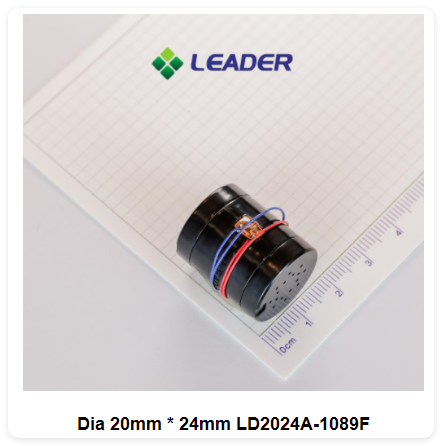
A linear resonant actuator (LRA) uses an electromagnetic system to move an internal mass back and forth around a resonant frequency. Unlike an ERM motor, an LRA does not depend on continuously rotating an eccentric weight.
LRAs are often selected when a product requires crisp feedback, controlled vibration intensity, and repeatable short-duration effects. They are suitable for smartphones, smartwatches, gaming controllers, and other compact electronic devices.
However, LRAs operate most efficiently near their designed resonant frequency. The driver, mounting structure, and mechanical enclosure must therefore be considered during system development.
Actuator Comparison Table
|
Engineering Factor |
ERM Motor |
LRA Motor |
Piezo Actuator |
| Motion mechanism | Rotating eccentric mass | Oscillating internal mass | Material deformation |
| Feedback character | General vibration or buzz | Crisp, controlled vibration | Localized, rapid response |
| Drive requirements | Relatively simple | Alternating drive near resonance | Specialized voltage driver |
| Control considerations | Speed and vibration intensity are linked | Amplitude control and resonance matter | Voltage waveform and mechanical loading matter |
| Typical applications | Basic alerts, low-cost electronics | Smartphones, wearables, controllers | Thin displays and specialized interfaces |
| Main design consideration | Start/stop behavior and vibration quality | Resonance, mounting, and driver compatibility | Voltage, displacement, and integration |
Actual performance depends on the specific actuator, driver, firmware, mounting method, and product enclosure. The table describes general design tendencies rather than guaranteed specifications.
5. How to Choose the Right Feedback Technology
Choosing a haptic solution starts with the intended user experience—not simply the motor's dimensions or rated vibration strength.
Step 1: Define the Sensation You Want to Create
Determine whether the product needs a basic alert, a short simulated click, a series of distinct pulses, or a more immersive effect.
A simple notification may work well with an ERM motor. A premium smartphone or wearable that needs crisp, repeatable feedback may benefit from an LRA. A thin interface requiring localized deformation may be better suited to piezo technology.
Step 2: Confirm Size and Mechanical Constraints
The available space affects the actuator's form factor, mounting position, and vibration transmission. Engineers should consider not only the component's dimensions but also the adhesive layer, supporting structure, nearby components, and enclosure.
A motor that performs well on a test fixture may feel different after installation in the finished product. Testing the actuator within the actual housing is therefore essential.
Step 3: Evaluate Response Time and Control
For short feedback events, start-up and stop behavior are important. Delayed or lingering vibration can make a simulated click feel less convincing.
For LRA designs, engineers should confirm the resonant frequency, driver compatibility, and any required resonance-tracking or braking functions. These factors influence how consistently the actuator reproduces the intended effect.
Step 4: Balance Power Consumption and Cost
Battery-powered devices need to balance vibration strength with energy use. Consider the supply voltage, peak current, activation duration, feedback frequency, and expected daily usage.
An actuator with a higher unit price may still be the better system-level choice if it meets the user experience requirements with less redesign or more efficient operation.
Step 5: Validate Reliability and Production Consistency
Before mass production, test vibration output, response consistency, acoustic noise, power consumption, and durability under representative operating conditions.
For OEM/ODM projects, also confirm sample availability, customization capabilities, quality-control procedures, and production lead times with the supplier.
6. Applications of Haptic and Tactile Feedback
Different products need different kinds of physical feedback. The right design depends on how users interact with the device and how clearly the system must communicate each event.
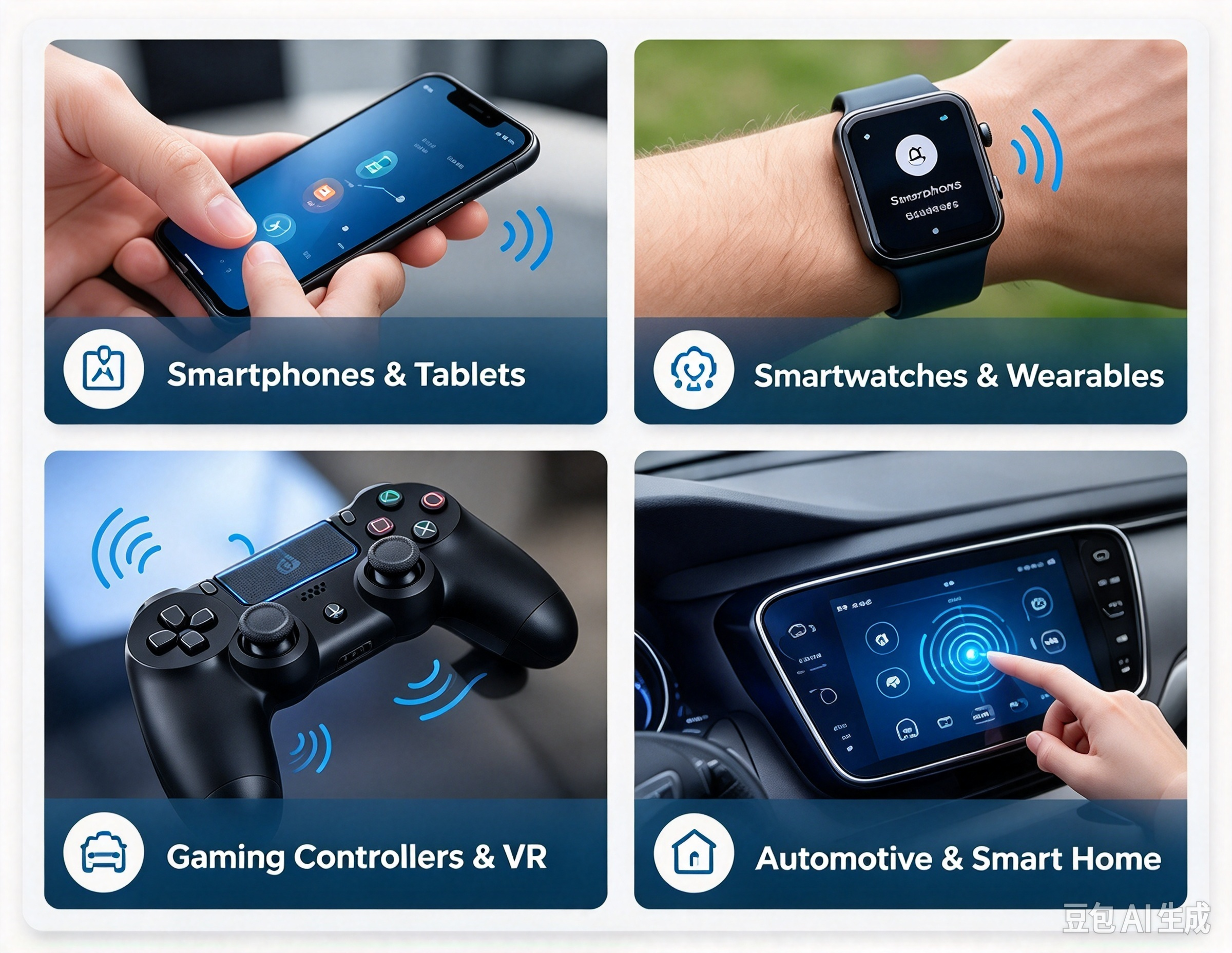
Smartphones and Tablets
Smartphones use haptic feedback for keyboard interactions, system notifications, and virtual controls. Well-designed vibration can make a touchscreen feel more responsive without adding physical buttons.
LRA motors are a common option for products that prioritize crisp and controlled feedback, although the final sensation depends on the complete device design.
Smartwatches and Wearable Devices
Wearables need feedback that is noticeable without becoming uncomfortable or draining the battery unnecessarily. A short vibration can communicate an incoming call, reminder, navigation instruction, or activity alert.
Compact coin vibration motors and other miniature actuators are useful options when space and weight are limited.
Gaming Controllers and VR Devices
Gaming controllers use vibration to communicate events such as impacts, movement, or environmental changes. More advanced systems may combine several actuators or use additional technologies to produce different sensations.
The engineering challenge is to make each effect distinct and responsive while avoiding excessive vibration, unwanted noise, or inconsistent output.
Automotive and Smart Home Interfaces
Automotive interfaces can use tactile feedback to confirm control inputs or communicate selected warnings. Smart home devices may use a short vibration or click-like sensation to confirm that a command has been registered.
In both applications, the feedback should be clear and predictable. Designers must also consider environmental conditions, product lifetime, safety requirements, and the consequences of missed or ambiguous feedback.
7. How to Test Haptic Feedback Performance
A reliable validation process should evaluate both measurable engineering parameters and the sensation experienced by users.
|
Test Item |
What to Evaluate |
Why It Matters |
| Acceleration | Vibration acceleration at a defined measurement point | Indicates vibration output under specified conditions |
| Response time | Time to reach and leave the target output | Determines how sharply feedback begins and ends |
| Power consumption | Operating current and energy per event | Helps estimate battery impact |
| Acoustic noise | Sound generated during operation | Identifies unwanted audible artifacts |
| Durability | Output and function after defined operating cycles | Supports lifetime and reliability requirements |
| Perceived feedback | User recognition, clarity, and comfort | Confirms whether the effect works in the intended application |
Use consistent test conditions, including the mounting method, enclosure, supply voltage, driver settings, and measurement location. For meaningful comparisons, record the test setup alongside the results.
A useful development process combines instrument measurements with structured user evaluation. Strong acceleration alone does not guarantee a better tactile experience; timing, repeatability, comfort, and the context of the interaction all matter.
Not exactly. Haptic feedback is the broader category of physical feedback, including vibration, motion, and force. Tactile feedback focuses on sensations perceived through touch. The terms overlap significantly in consumer electronics.
Not in every situation. LRAs are often preferred for crisp, controlled feedback, while ERM motors can be a practical and economical choice for basic vibration alerts. The best option depends on the required sensation, cost, space, driver, and power budget.
Yes. A vibration motor can provide a short physical response when a user taps a virtual button. The vibration pattern and mechanical coupling should be designed to make the interaction clear without creating excessive noise or discomfort.
A haptic actuator is a broad term for a component that produces physical feedback. A vibration motor is one type of actuator that creates vibration. Other haptic actuators include piezoelectric devices and force-feedback mechanisms.
Buyers should confirm the desired feedback sensation, package size, operating voltage, current requirements, response characteristics, driver compatibility, mounting conditions, lifetime targets, and production requirements. Sample testing in the intended enclosure is recommended before final selection.
Choose the Right Haptic Solution for Your Product
Haptic feedback and tactile feedback help bridge the gap between digital commands and physical interaction. Although the terms overlap, understanding their scope helps engineers define clearer product requirements and select appropriate technologies.
ERM motors remain useful for straightforward vibration alerts, LRAs offer a strong option for responsive and controlled vibration, and piezoelectric actuators support specialized designs requiring localized mechanical movement.
For product developers, the most effective solution is the one that balances user experience, electrical performance, mechanical integration, reliability, and cost.
Leader provides miniature vibration motor solutions for OEM and ODM applications, including ERM vibration motors, linear motors, coin vibration motors, and other compact motor designs.
Explore our linear motor customization solutions or small vibration motor product range to discuss actuator options for your next project.
Consult Your Leader Experts
We help you avoid the pitfalls to deliver the quality and value your micro brushless motor need, on-time and on budget.
Post time: Dec-01-2023


